Fraud Prevention Tips from a Former Con Man

Talk about using your super powers for good. Before he was even old enough to vote, Frank Abagnale became one of the most notorious con men in history. From the age of 16-21, he posed as a pediatrician, lawyer, sociology teacher, film director and even an airline pilot to hitch rides all over the world. He estimates he flew a million miles to more than 26 countries, all in his impressive Pan Am uniform he got by calling the company’s headquarters and telling them he had lost his while traveling.

He also defrauded a lot of banks. After stealing more than $300,000, he was caught and served time in France, Sweden and the United States. After being granted parole at the age of 26, he was hired by the FBI and is now a respected authority on forgery, embezzlement and document fraud.

Once a notorious con man, Frank Abagnale is now a respected authority on fraud prevention. “What I did 40 years ago is 4,000 times easier to do today than when I did it," he said.

Once a notorious con man, Frank Abagnale is now a respected authority on fraud prevention. “What I did 40 years ago is 4,000 times easier to do today than when I did it,” he said.

After appearing on Johnny Carson’s show nine times, Frank was urged by him to write a book. “Catch Me If You Can” is the fascinating story of his life, which Steven Spielberg made into a movie starring Leonardo DiCaprio in 2002.

Frank also started his own company, Abagnale & Associates, to educate others on fraud prevention. Looks like he’ll never run out of work. Fraud is still a huge problem in the U.S., costing more than $900 billion a year.

According to the most recent Payment Fraud and Control Survey, 87 percent of cash managers, analysts and directors claim to have incurred instances of check fraud in 2012.

Although claims have been made for years that the U.S. would soon be a checkless society, around 75 percent of payments from one company to another are still made by check. Abagnale believes the U.S. is still 20-30 years away from being completely paperless. And it’s never been easier to create a counterfeit check.

“What I did 40 years ago is 4,000 times easier to do today than when I did it,” he said in an interview on CNN, talking about his counterfeiting. Back then he needed an entire room to set up a large press to create fake checks, a tedious process. Today all you need is a stolen check for the account number, a laptop and a scanner.

Frank shares tips on how to prevent all types of fraud. Here are a few of his tips for businesses:

Tear out the hard drive of any printer or copier you discard. They store images of everything that is copied on them, some of which may be confidential information. Be sure to destroy any hard drives before getting rid of them.

Use a black uni-ball 207 pen when you sign documents, especially checks. The ink in these pens forms a bond to the paper that prevents the signature from being stripped. It is the only pen whose ink cannot be altered by chemicals or solvents.

• CFOs and chief auditors need to play an active role into the purchasing of the company’s checks. Purchasing agents often opt for the cheapest checks. Companies need to invest in checks that contain the latest security features. These include Thermochromatic inks that react to temperature changes and cannot be replicated and prismatic backgrounds with multiple colors that are difficult to reproduce.

For more fraud prevention tips from Frank, buy his book “The Art of the Steal: How to Protect Yourself from Fraud, America’s #1 Crime.” (There are also plenty of tips in my book, “How Not to Hire a Guy Like Me: Lessons Learned from CEO’s Mistakes.”)

Frank has made it his life’s mission to prevent people being stolen from. “If you make it easy for someone to steal from you, someone will,” he says. “Don’t make it easy.”

As the Turnaround Authority, I’ve worked with many companies that made it way too easy for employees to steal from them. One of my favorite stories is about a company in Dallas that had invested in surveillance equipment to keep a watch on inventory that might walk out the door. The problem was that the surveillance room was kept unlocked.

This was back in the days of cassette tapes, so after somebody stole some inventory, he or she simply went to the surveillance room and either erased or replaced the tape. One thoughtful fellow merely placed the tape player on pause, then restarted it when he was done.

While some thieves have to be incredibly creative, like Frank, to steal, others merely jump on an available opportunity. Don’t give them one.
Fraud is Everywhere

Readers of this blog and my new book, “How Not to Hire a Guy Like Me: Lessons Learned From CEOs’ Mistakes,” tell me they especially enjoy my stories about fraud. I have plenty more where those came from.

Fraud is everywhere, and not just at the multi-million dollar corporations I deal with. Anywhere you’ll find money and people with access to that money, you’ll find fraud. Parents even steal from organizations their children are involved with. Nobody, and no group, is immune to fraud.

Here are just a few recent examples, including the first one that appeared in the newspapers today.

• A former guidance counselor and assistant principal in the Memphis City Schools system made $120,000 from a scheme he ran from 1995 to 2010 that involved him helping teachers cheat on their certification exams. They paid him $3,000 and he paid test takers a couple of hundred to take the tests on their behalf. He was sentenced to seven years in prison.

• A New York socialite got 19 months in prison for swindling corporations out of at least $20 million. She asked CEOs to give her free and discounted goods that she said she would distribute as samples and promotional packages in her supposed large network of retail establishments and other outlets to increase sales. Instead she sold the merchandise for profit.  She funded almost 200 investment accounts and purchased expensive art with the money she stole.

• An Australian man stole $20 million from his company over a 12-year period by paying almost 300 invoices to a fake supplier that he had set up. He used his ill-gotten gains to buy racehorses, motorcycles and boats and gifts for young women he found while trolling “Sugar Daddy” websites. He pled guilty and was sentenced to 15 years in jail.

• A dentist in Toronto even swindled his mom in a Ponzi scheme that netted him $40 million. He used the money for personal expenses and paid off credit cards. I hope he at least bought his mom a nice Mother’s Day present.

• A PTA president in Atlanta made news when she was found to have stolen $57,000 that was meant for the PTA at her child’s school. Instead of depositing checks in the PTA account, including several donated by a local church, she deposited the funds into a bank where she worked and was also a co-owner.

• The Girl Scout motto is “Be Prepared.” But they weren’t prepared for this. A Girl Scout troop leader in California stole $6,000 of the proceeds from her scouts’ cookie sales by misusing a debit card tied to the account. She spent the money on buying gas, getting her nails done and purchasing items at Nordstrom and Victoria’s Secret. Seems she had quite a secret of her own.

I’ve said it before and I’ll say it again. Any time there is money involved, you must have checks and balances and review who has access to that money. Go by the scout motto and be prepared.

“Nice People” Commit Fraud

“Bernie would never do that. He’s my friend,” said one potential investor who lost everything.

“He seemed like a nice person and not concerned about answering my questions at all,” said the reporter.

These were a few comments made about Bernie Madoff in the movie “Chasing Madoff” that I saw recently. It’s a documentary about whistle blower Harry Markopolos, who spent 10 years trying to get action taken on what he had quickly recognized was a massive fraud when his company asked him to come up with a competitive product and he ran the numbers.

Those comments struck me because that is often the case when I’ve uncovered fraud at my clients’ companies. Management and co-workers say, “Why, he is the nicest person in the office.”

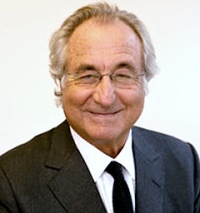
He was such a nice guy, some people commented about Bernie Madoff. He would never steal money.

He was such a nice guy, some people commented about Bernie Madoff. He would never steal money.

I’ve seen everyone from owners’ best friends to grandmothers to the kindly old lady in the church office commit fraud. It’s been my experience that most of these people have no prior offenses, which was backed up by a report generated by the Association of Certified Fraud Examiners (ACFE) a few years ago. Here were a few other key findings from that report.

• More than half of the offenders were between 31-45 and slightly more likely to be male. The older the offender is, the bigger the loss.

• More than 80 percent of offenders work in one of six departments: accounting, sales, operations, sales, executive/upper management, customer service or purchasing. No big surprise there — these are the people that have access to money, can write off on purchases or have expense accounts.

• Only seven percent had been previously convicted of a fraud offense. I believe that low percentage is partly because most fraud offenders are let go from previous companies and never prosecuted. This is just one of the reasons I always advise my clients to prosecute those who commit fraud.

In the ACFE’s 2012 Report to The Nations on Occupational Fraud and Abuse, it was reported that the median loss suffered from fraud cases was $140,000. But more than 20 percent of the cases involved losses of more than $1 million.

Small business owners especially need to be concerned as they are more likely to be hit, primarily because they have fewer internal controls.

Want to take a guess how long the fraud goes on before it was detected? A median of 18 months.

Most people don’t go to work for a company with the idea of stealing from it. Most of them see an opportunity and then seize it. And that person is often the nicest person in the office.

I write a lot about fraud and how to prevent it in this blog and also in my new book, “How Not to Hire a Guy Like Me.” I tell the story of sweet Aunt Tess, a payroll clerk that everyone at the office loved. And she was so dedicated she had never missed a payroll in 25 years, even dragging herself to the office hours after an appendectomy. Bless her heart!

Well, old Aunt Tess was there, fresh surgical bandages and all, because she had a whole army of fictitious employees that allowed her to steal up to $100,000 a years.

Fraud does, and can happen to anyone. If you don’t have fraud controls in place in your office, make it a number one priority to do so. Maybe the nicest person in the office can stay that way.

Low-Tech Fraud Thrives in High-Tech Era

Some things never go out of style. Take all kinds of fraud, for instance. Even in the era of increasing high-tech fraud committed on the Internet, good old-fashioned low-tech fraud is here to stay.

Just this week I read about three cases in the news that involved fraud of the low-tech variety. People stole millions of dollars with nary a click of a mouse.

The ironically named Angel Food Ministries was in the news again because the founders of the now-defunct faith-based non-profit that provided low cost food through a network of churches and civic organizations pleaded guilty to federal charges.

The indictment, which was a whooping 71 pages, included allegations that pastors Joe and Linda Wingo and their son Andy took kickbacks from vendors, used ministry credit cards for personal purchases and trips to Vegas and New York, and used ministry bank accounts for their own benefit.

Staten Island deli king Saquib Khan took the concept of check kiting to a whole new level

Staten Island deli king Saquib Khan took the concept of check kiting to a whole new level

It’s hard to understand why the pastors needed to treat the ministry’s accounts as their own when they were paying themselves $2.5 million in executive and family compensation. I guess angels have a lot of expenses and those wings won’t fly them all the way to Vegas.

Another case of low-tech fraud in the news involves postal workers with sticky fingers. Remember how your mom told you never to send cash through the mail? Well, these folks were stealing more than $10 bills tucked inside little Susie’s birthday card.

Gerald Eason and Deborah Fambro-Echols stole more than 1,800 tax refund checks, Social Security and veterans’ benefit checks in Georgia for the past four years while working at the Atlanta Processing and Distribution Center. They recruited some equally unethical people at banks and businesses to cash their stolen checks.

They’ve been sentenced to jail and fined, as have some of their equally shifty cohorts who cashed the checks.

My favorite story involves Staten Island deli king Saquib Khan, who committed fraud to the tune of $82 million. That’s no bologna, no matter how you slice it.

Trained as a doctor in his native Pakistan, Khan moved to the U.S. in the 1980s and wound up working with his sister and brother-in-law in the deli business. He then founded Richmond Wholesale Company and owns three delis of his own. Sales last year for the cigarette and grocery business were $125 million.

After Hurricane Sandy caused his business to encounter financial troubles, Khan put that creative entrepreneur mind to work and devised a scheme that involved writing hundreds of worthless checks to himself, then depositing them in accounts in several banks under his name or in one of his businesses names, and withdrawing money.

In just two weeks in November he wrote more than a dozen checks a day to himself, drawing from accounts at six banks. Several lawsuits are pending against him and he is trying to pay the money back, which may involve selling his business. Khan may have sliced his last salami.

No matter how technologically advanced our society becomes, low-tech fraud will always be with us and cost corporations billions of dollars a year.

That’s why I devoted an entire chapter to fraud in my new book, “How Not to Hire a Guy Like Me: Lessons Learned from CEOs Mistakes,” with tips on how to prevent it and what to do if it occurs. No matter what business you are in, or how big it is, you are susceptible to fraud.

And remember, mom was right. Don’t send cash through the mail.

My Number One Tip for Fraud Prevention

It happened again. Another fraud case. This time it was at UPS in Indianapolis, where an employee and a contractor are accused of stealing more than $1.2 million over a two-year period.

It worked like this. The UPS employee, Mark Gleason, set up a maintenance contract with Dayton R. Sloan II at D&S Construction in 2011 to provide general contracting services at close to 40 UPS locations in Indiana and Illinois.

Sloan had done some carpentry work around UPS facilities in the Indianapolis area and Gleason was the supervisor of the plant facilities. Apparently they hit it off well enough to become partners in crime.

visaGleason had the authority to sign off on invoices up to $5,000 so between January 2011 and December 2012, he authorized several invoices under that amount, payable to D&S. Sloan received the checks and deposited them in a corporate account.

Sloan would then use the money to purchase hundreds of thousands of dollars worth of prepaid Visa gift cards that he would share with Gleason. The two then went on quite the shopping sprees, purchasing flat screen TVs and jewelry. Gleason even used the cards for $3,000 of corrective eye surgery and more than $40,000 towards buying cars.

And it wasn’t even someone at UPS that caught them. A bank that D&S Construction used and a seller of the gift cards both became suspicious and alerted authorities, according to the prosecutors.

The two men now are being tried and face up to 20 years each on counts of wire fraud and up to 10 years on counts of money laundering in addition to fines and restitution. Kudos to UPS for prosecuting them. Another one of my fraud prevention tips is to always prosecute people who steal from you.

Which leads me to my number one tip for fraud prevention: Always poke around your books. If you are a CEO or business owner, you need to occasionally ask questions about items in your budget. How often do we pay for that? What does that company do for us?

Unless your company has a full-blown audit, these type transactions will go unnoticed. And even if you do have an audit, auditors often set the level at which transactions are reviewed. In this case, they most likely looked at invoices exceeding $5,000, and may have done a statistical sampling of transactions slightly below that level. So Gleason was able to continue his scheme until people outside of UPS caught him.

In addition to periodically asking questions and poking around your books, make sure your CFO or your auditors regularly conduct a statistical sampling at 80 percent below the transaction level. I have found that is the sweet spot for a lot of people committing fraud.

That may not have caught Gleason in his gift card scheme. But checking into the services that D&S was providing would have.

Never be afraid to ask questions about financial transactions in your company. And never hesitate to prosecute people who do steal from you.

The High Cost of Fraud and How to Prevent It

More than a trillion dollars. That’s how much fraud is costing companies in the US each year.

The Computer Evidence Specialists LLC released the “2011 Report on the Cost of Fraud in the United States” earlier this year. The goal was to put a figure on the total cost of fraud in the United States from six industries: corporate, securities, financial, mortgage, healthcare and insurance.

Here was their conclusion: “Through our research, compiled from the most recent data available on the subject, we conservatively estimate that fraud annually costs victims $1.32 trillion.”

The figure is conservative, as a lot of fraud is underreported by victims or not reported at all.

Shocking, isn’t it? The truth is that no company is immune to the cost of fraud and you need to be vigilant in your efforts to prevent it.

The Woodruff Arts Center this week learned that a former employee embezzled $1.48 million over the course of five years.

The Woodruff Arts Center this week learned that a former employee embezzled $1.48 million over the course of five years.

The arts community in Atlanta was saddened this week to learn that $1.48 million was embezzled from the Woodruff Arts Center, the largest cultural institution in Atlanta.

Seems a mid-level administrator, who wasn’t even in a finance-related job, figured out a way to set up a fake company. Over a period of five years, the man regularly submitted invoices from the fake company and raked in big bucks. He wasn’t caught until after he left, for unrelated reasons, and someone took note of suspicious invoices.

A simple set of checks and balances would have caught the thief before he collected his first check.

Here are some key things to remember when considering your own system of checks and balances. Remember that any place money or goods exist or move is a place where theft or fraud could occur.

Remember that anyone can commit fraud. Family member, long-time employee, revered CFO. Don’t consider anyone above suspicion. I worked with a company once where the son was stealing from the family business after his dad died. He felt he wasn’t being paid enough and stealing was his way of claiming his inheritance.

Always poke around your books. No matter how large your company gets, take some time to peruse the checkbook or QuickBooks. Ask where the money is going. In the case of the Woodruff Arts Center, the fake company was one of only 13 that were regularly paid. How long would it have taken to do a Google search on the fake company or question someone about the services supposedly being rendered?

Monitor and review monetary trends. Determine what types of numbers are most meaningful to your company—the cost of goods or services, employee expenses for example—and determine the acceptable range for those numbers. Graph the data for those numbers and pay attention if any numbers fall outside of that range.

Change the standard by which you review transactions. For example, if your company only reviews expense reimbursement requests that are above $1,000, regularly review those at around the 80 percent level. I’ve found that seems to be a favorite spot for thieves. The Woodruff Arts Center thief got away with his fraud for so long because even though the amounts that were paid to the fake company increased over time, they remained under the limit that may have drawn attention.

Trust your instincts. If something in your company seems a little off, investigate further. Don’t feel guilty about asking questions. You’re in charge.

Don’t let fraud cost money at your company. Tighten up those checks and balances.

Read more about fraud prevention in my upcoming book, “How Not to Hire a Guy Like Me: Lessons Learned from CEOs’ Mistakes.” The book will be available on Amazon in early 2013.

Why I Know Voltaire & Rousseau Weren’t Savvy Business Owners

Lying is hardly a new phenomenon. The Bible tells us the first lie ever told was in the Garden of Eden, when the snake lied to Eve to manipulate her to eat the apple God had forbade her to eat. And look how that turned out: apparently horrible child bearing pains, a ton of farming and a lot less Eden.

Recently the Scrabble Tournament world — yes, there is one — was rocked by a cheating scandal when a young player was disqualified in the national tournament in Orlando when he pocketed blank tiles.

More than 125 Harvard students were accused of cheating by allegedly working together on a take-home exam after being instructed to work alone.

Cheating at Scrabble? And Harvard, the highly revered alma mater of more presidents than any other university? What’s next? Did Mr. Rogers never pay his income taxes?

The press will probably spend a lot of time debating and analyzing whether dishonestly is on the rise among young people. They may blame it on societal problems and the dissolution of the family, or perhaps the pressure put on youth. They may blame the well-publicized, poor examples adults are setting.

Athletes take illegal, performance-enhancing drugs (the most recent case being once-7-time Tour De France champion Lance Armstrong). Journalists fabricate quotes. Money managers steal millions from their clients.

As the Turnaround Authority, I’m not all that interested in exploring the reasons people cheat, lie, embezzle and commit fraud. Jean-Jacques Rousseau thought people were born innately good and turned corrupt through forces of society. Who knows? I’m not hired to delve into embezzlers’ childhoods or wax philosophical.

The important point for my clients is to make them recognize that not everyone is honest. People lie on their résumés to get jobs, then commit fraud or embezzle once they have them.

Some business owners assume their employees are trustworthy. They have what I call the Candide syndrome. In Voltaire’s satiric novel, despite suffering numerous tragedies, Pangloss persisted in his belief that this world is “the best of all possible worlds.”

Our world needs optimists. Heck, if it weren’t for optimists, our country’s founders would never have risked their lives sailing over the Atlantic in search of a better life.

It’s nice to believe that man is innately good and trustworthy and that this is “the best of all possible worlds.” But as a business owner, that’s a luxury you literally can’t afford. You always have to be on alert to the possibility of embezzlement, fraud and theft.

No matter your business, always watch your back door and keep your eyes open.

What’s really going on at your company?

My Recent Trip to the Michael Hart Show: Lessons in Fraud

I recently had my second guest appearance on the Michael Hart show. Michael and I had a rousing conversation about Fraud and other things that business leaders can do to protect themselves from making the mistakes of past CEOs.

I hope you enjoy these links, which will allow you to listen to the two segments of the show.

Lee Katz Part One

Lee Katz Part Two

There wasn’t a lot of time for call-ins or listener comments, but I’d love to know what you think and if you have any questions or comments.

13 Fraud Prevention Tips

My last 13 posts have been specific tips designed to help you do a better job preventing fraud at your company. My hope is that by calling your attention to the variety of ways that people commit fraud and by sharing these anecdotes you’ll be proactive in putting in place checks and balances and sticking to the kind of no-nonsense fraud prevention policies that keep businesses healthy and safe.

Let this post serve as a reference for each of the 13 Fraud Prevention Tips I’ve offered, and please feel free to add your own.

1. If Someone Commits Fraud, Have Them Thrown in Jail

2. Leverage the Value of an Informal Fraud Policy

3. Fraud Prevention Tip: Keep Your Security Room Locked

4. Always Have Someone Double Check the Payroll

5. Change the Standard by Which You Check Your Transactions

6. Don’t Rehire People Who Steal From You – Seriously

7. Focus on Checks and Balances that are Rechecked and Rebalanced

8. Take All Shortages Seriously

9. Always Poke Around Your Books

10. Regularly Monitor and Review Monetary Trends

11. Match Your Purchase Orders Against Your Invoices Before Putting the Invoices in Your System

12. Think About the Financial Impact of Rare Events on Your Business

13. Trust Your Instincts

Someone asked me why I did so many posts on Fraud Prevention that they ran right out of March – Fraud Prevention Month – and all the way to the end of April. As I mentioned in my very first post about fraud this year, preventing fraud is a year-round process. You need to be vigilant all the time, building a system that is internally monitored – and that monitors the monitors.

Please let me know what your fraud stories are, what tips you’d add to my list and how you prevent fraud.

Fraud Prevention Tip: Trust Your Instincts

Without trying to justify anyone’s overactive imagination and undue since of paranoia, I want to finish my series on fraud by providing you with one last fraud tip: trust your instincts.

That’s not a reason to go firing people without evidence, but if you think that something fishy is afoot, trust your instincts and investigate further. It’s your business – or at least it’s in your charge – and you don’t have to feel guilty about questioning processes, transactions or people.

I recall a manufacturing company in Columbia, SC that was making a dress line for an outlet mall chain. The president of the company had a nasty gambling habit and owed the mob several hundred thousand dollars from Atlantic City gambling debts (I was brought in because he took his eye off the ball). To pay his debt, he was operating some special sales on nights and weekends when the plant was closed. He would simply pull a truck right up to the warehouse, load merchandise onto it and sell it to the mob at a discount; they would apply that against his debt.

All of a sudden our shrinkage went way up, and I had to figure out what happened – but I couldn’t. To date he had been a good president, and he ran a tight ship. I couldn’t figure out what it was that was ravaging the shrinkage numbers, but something wasn’t sitting right with me, and even though it seemed dramatic, I had to trust my instincts. Thus, I hired a private detective to spy on the warehouse just in case there was something I was missing. I expected to find some miscellaneous and uncoordinated left that I was just otherwise missing, but what I learned was the magnitude of the operation going on behind my back.

As in all fraud cases, I’m glad I trusted my instincts and hired a private investigator. And that’s the advice I want to leave you with regarding fraud: trust your instincts.

Have you ever trusted your instincts only to find exactly what you feared? Have you not trusted your instincts to your detriment?

20120325-190411.jpg