When An Entrepreneur Needs to Hire a Professional Manager

Every successful entrepreneur of a certain size company figured out at some point that he needed to hire a professional to run the company so he could do what he does best — create new products and services, explore new market niches and consider new ways to market existing products and services.

Every company needs a balance between the creative visionary and the person who can focus on the day-to-day activities of running the company. The skills and vision needed to start a business are not the same as those required to keep it running.
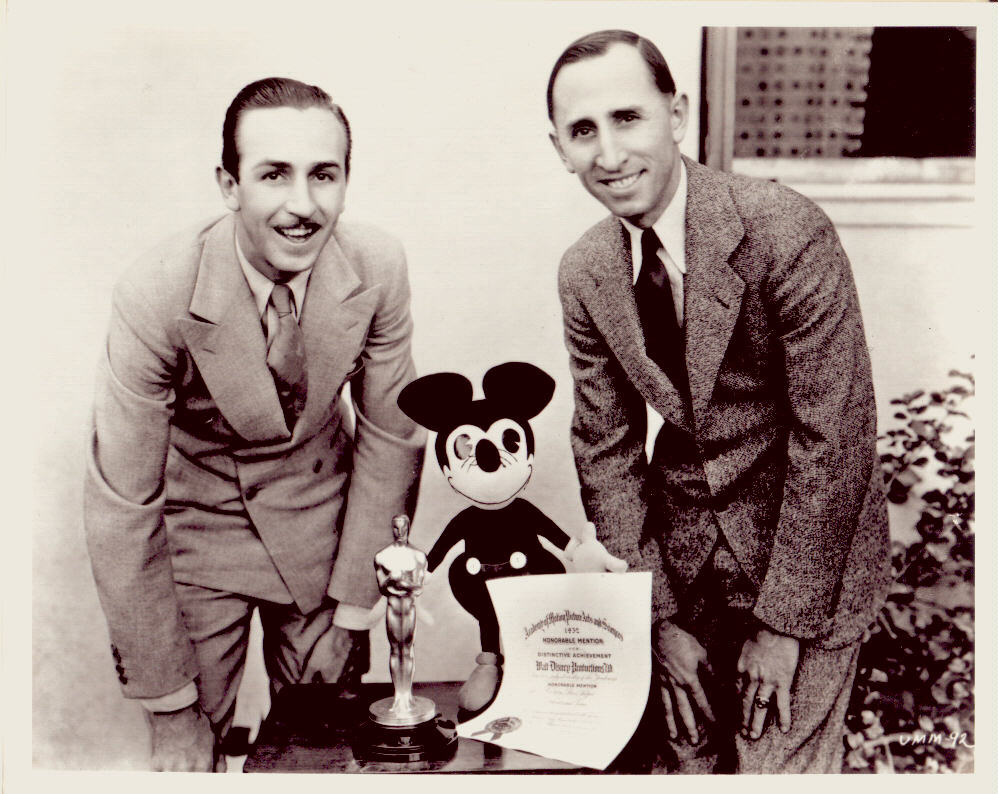
Walt Disney dreamed up ideas for Disney. But it was his brother Roy (right) who found the money to fund his big dreams.

Walt Disney dreamed up ideas for Disney. But it was his brother Roy (right) who found the money to fund his big dreams.

We are all familiar with Walt Disney, the creative genius behind Disney. How many people know that he actually started the business with his younger brother, Roy? Walt was the creative one, but Roy is the one who raised the money and kept it financially stable. In terms of revenue, it is now the largest media conglomerate in the world.

Mark Zuckerberg hired Sean Parker as the first president of Facebook in 2004, and although Sean was later ousted for his excessive partying, Zuckerberg has said, “Sean was pivotal in helping Facebook transform from a college project into a real company.”

Sometimes I am asked at what point an entrepreneur needs to hire a professional manager. There is no particular formula. It totally depends on the industry and the needs of the company. It could be at the $1 million level or one much higher, or even in some cases, lower.

As an indication, here are two signs that it may be time to hire a professional to help you run your company:

1. You are no longer doing what you do best

Rather than focusing on innovations to keep your company growing and increasing market share, you are spending more time on areas like accounting and managing a growing workforce. Getting help in those areas will allow you to focus on using your personal strengths to improve the company.

You may be one of those entrepreneurs who actually is a very good manager and things have been going well so far. But you can only handle so many jobs, and if you are spending a majority of your time managing the company, who is managing the innovation to make the company continue to grow?

2. Your company has outgrown your ability to handle it on your own

A professional manager will not only take over some of the workload, she can bring new skills to the company and instill best practices from experiences at other businesses. She can also analyze the strengths and weaknesses of your business in a way you are unable to as the founder of the business.

A successful entrepreneur is one that is able to recognize when he needs to hire professional help and is then able to make the transition to having someone else handle the day-to-day management.

For tips on how to hire the right professional, see my column “How to Search for Superstars.”

Look for me November 10 at 4:30 at the Book Festival of the Marcus Jewish Community Center of Atlanta. I’ll be discussing my book,  ”How Not to Hire a Guy Like Me: Lessons Learned from CEOs’ Mistakes.” The event is free and open to the public. Click here for more information.

The 10 C’s of Borrowing for CEOs

In my last column, I gave tips on how to have a good relationship with your banker and understand his point of view. This week, I’d like to share my 10 C’s on how to borrow with honesty and integrity. Follow these tips and you’ll have the best chance of growing your business long-term as you further enhance your relationship with your banker and become a better borrower.

1. Character is of the utmost importance to bankers.

Bankers need to know you’ll do the right thing when your company is in distress. If they can’t trust you, they can’t put money in your hands. That doesn’t mean fake good character – it means have and demonstrate good character.

2. Carelessness comes down to poor record keeping.

Carelessness can also hurt your bank by causing it to write-off loans needlessly or even lose its federal loan insurance such as SBA Guarantees. Run your shop well, which includes good bookkeeping practices, regular audits, competent comptrollers, and mixing up your monitoring practices. You should also verify for yourself the details of your business’s financial situation.

3. Complacency is not an asset.

Banks are interested in how you react to tough situations. Don’t just tell them what you’re legally required to when they ask; keep them updated to avoid surprises. Bankers hate surprises. This is all a part of the larger principle of being proactive rather than reactive. Proactive business owners keep their banks appraised of the situation, which makes their banks more likely not to react to unfortunate circumstances by demanding payment on loans.

4. Contingency Plans are key for orderly succession if something happens to you.

Bankers value stability, and even though many business owners think they’re invincible, history has proven otherwise. Bankers are more comfortable if they know what will happen in the event that something bad happens to you – like disability or death (God forbid) and will continue to work with subsequent leadership. It’s also wise to introduce your banker to the future generation of leaders at your company.

5. Capital is your net worth (assets minus liabilities).

Bankers want an extra cushion of equity so they can be more flexible with your company in case it has a bad year. A CEO and a banker need to balance one another’s needs in order to maintain sufficient capital. I sometimes find that telling entrepreneurs, owners and CEOs to keep extra capital around is like telling a dog to save part of his dinner for later, but if you can show your banker that you’re capital-wise, he’ll be more likely not to call your loan after a bad year.

6. Collateral is a bank’s leverage and makes bankers feel more comfortable.

Collateral does not repay a loan, as many entrepreneurs think when they pledge their assets, but it does ease the banker’s mind.

7. Capacity is your ability to repay.

Bankers check to see if you have champagne tastes but a beer wallet. If you seem like you can repay what you’re asking for – which is to say, a reasonable sum and not your dream loan – you’re more likely to see the money. Shoot for the stars in life, but a bank loan is a different matter.

8. Competition works to your advantage.

Banks are concerned about their competitors’ interest rates, collateral packages and guarantees. You can use this to your advantage by doing your homework when seeking a loan and politely making that clear to your banker. Knowing about your bank’s competition can also let you prepare for a quick capital search should your banker pull out.

8. Controls are your built-in monitors.

Bankers want to know about your company’s controls. Do you have checks and balances for payroll clerks, controllers, CFOs and inventory personnel? Do you watch the back door? Outline the steps you take in your plans and conversations with your banker; ask for his recommendations. If you find an issue, correct it and then update your banker that you’ve fixed the problem.

10. Communication is essential.

Almost every one of these tips hinges on communication. Don’t keep things from your banker. If he knows what’s happening he can work with you instead of against you. Work with your banker for the best relationship.

With “The CEO’s 10 C’s of Borrowing” in mind you’ll be better equipped to understand where your banker is coming from and not get frustrated when things don’t seem to go your way. Talk with your banker and try to understand him. It will only be to the benefit of your business.

Look for me November 10 at 4:30 at the Book Festival of the Marcus Jewish Community Center of Atlanta. I’ll be discussing my book,  “How Not to Hire a Guy Like Me: Lessons Learned from CEOs’ Mistakes.” The event is free and open to the public. Click here for more information.

 

Tips on Dealing with Your Banker

I’ve been on both sides of that big banker’s desk. Early in my career I worked as a banker, which gave me invaluable experience on learning how the money guys think. We learned the things that would make us fire CEOs and shut down companies.

These were lessons that were invaluable to me during my entire career as the Turnaround Authority. I know what bankers, investors and other creditors are looking for when they analyze a business. I know what they want to hear from CEOs and business owners.

Businesses need money to operate. That means they generally need bankers and investors — the money guys. But many CEOs treat their bankers as the opposition, like Mr. Potter, “the richest and meanest man in the county” in “It’s a Wonderful Life.”

Having a good relationship with your banker is so important, I devoted an entire chapter to it in my book “How Not to Hire a Guy Like Me: Lessons Learned from CEOs’ Mistakes,” which covers the 10 C’s of bank relationships for CEOS.

Here are just a few tips on how to have a good relationship with your banker. (For more info, you can always buy my book!)

1. Always keep your banker informed

Communication is one of the 10 C’s I discuss in my book and is the key to having a good relationship with your banker. We’ve all gone through difficult situations where we didn’t want to share bad news with someone, preferring to stick our head in the sand or hope the problem goes away. But not telling your banker when your company is having problems paying a vendor, collecting receivables or going through a cash flow crunch is the exact wrong thing to do. In fact, if your banker finds out you have not been disclosing crucial financial information, it can be the quickest path to having your bank loan called or to losing your financing.

2. Have contingency plans

Bankers and other money people like stability. They want to know you have a plan in place in the event that one of the 3 D’s happens — death, disability or disappearance. Yeah, I’ve had a few CEOs vanish on me. You can add that to the list of behaviors that won’t endear you to a banker.

While acting as CEO at one company I hosted a cookout with the employees. You’d be surprised what you learn while chatting around the grill. One employee mentioned excess inventory purchasing. Turned out it was a case of multi-million dollar fraud. The previous CEO knew something was wrong but didn’t deal with it. I found the problem and had four executives arrested. The CEO? Gone with the wind.

Do you know what will happen to your business if any of the three D’s occurs? Make a plan and show it to your banker.

3. Demonstrate good character

Do what you say you will do. Make your payments when they are due. Keep your banker informed. If you have and demonstrate good character your banker is more inclined to work with you, rather than against you.

The money people want to trust you — indeed, they are placing a great deal of trust in you when they close on that loan to your company. Make them happy they extended that trust.

A banker can be a powerful ally for your business. One of the best things you can do for your business is to have a good working relationship with your banker.

Look for me November 10 at 4:30 at the Book Festival of the Marcus Jewish Community Center of Atlanta. I’ll be discussing my book,  “How Not to Hire a Guy Like Me: Lessons Learned from CEOs’ Mistakes.” The event is free and open to the public. Click here for more information. Hope to see you there!


Fraud Prevention Tips from a Former Con Man

Talk about using your super powers for good. Before he was even old enough to vote, Frank Abagnale became one of the most notorious con men in history. From the age of 16-21, he posed as a pediatrician, lawyer, sociology teacher, film director and even an airline pilot to hitch rides all over the world. He estimates he flew a million miles to more than 26 countries, all in his impressive Pan Am uniform he got by calling the company’s headquarters and telling them he had lost his while traveling.

He also defrauded a lot of banks. After stealing more than $300,000, he was caught and served time in France, Sweden and the United States. After being granted parole at the age of 26, he was hired by the FBI and is now a respected authority on forgery, embezzlement and document fraud.

Once a notorious con man, Frank Abagnale is now a respected authority on fraud prevention. “What I did 40 years ago is 4,000 times easier to do today than when I did it," he said.

Once a notorious con man, Frank Abagnale is now a respected authority on fraud prevention. “What I did 40 years ago is 4,000 times easier to do today than when I did it,” he said.

After appearing on Johnny Carson’s show nine times, Frank was urged by him to write a book. “Catch Me If You Can” is the fascinating story of his life, which Steven Spielberg made into a movie starring Leonardo DiCaprio in 2002.

Frank also started his own company, Abagnale & Associates, to educate others on fraud prevention. Looks like he’ll never run out of work. Fraud is still a huge problem in the U.S., costing more than $900 billion a year.

According to the most recent Payment Fraud and Control Survey, 87 percent of cash managers, analysts and directors claim to have incurred instances of check fraud in 2012.

Although claims have been made for years that the U.S. would soon be a checkless society, around 75 percent of payments from one company to another are still made by check. Abagnale believes the U.S. is still 20-30 years away from being completely paperless. And it’s never been easier to create a counterfeit check.

“What I did 40 years ago is 4,000 times easier to do today than when I did it,” he said in an interview on CNN, talking about his counterfeiting. Back then he needed an entire room to set up a large press to create fake checks, a tedious process. Today all you need is a stolen check for the account number, a laptop and a scanner.

Frank shares tips on how to prevent all types of fraud. Here are a few of his tips for businesses:

Tear out the hard drive of any printer or copier you discard. They store images of everything that is copied on them, some of which may be confidential information. Be sure to destroy any hard drives before getting rid of them.

Use a black uni-ball 207 pen when you sign documents, especially checks. The ink in these pens forms a bond to the paper that prevents the signature from being stripped. It is the only pen whose ink cannot be altered by chemicals or solvents.

• CFOs and chief auditors need to play an active role into the purchasing of the company’s checks. Purchasing agents often opt for the cheapest checks. Companies need to invest in checks that contain the latest security features. These include Thermochromatic inks that react to temperature changes and cannot be replicated and prismatic backgrounds with multiple colors that are difficult to reproduce.

For more fraud prevention tips from Frank, buy his book “The Art of the Steal: How to Protect Yourself from Fraud, America’s #1 Crime.” (There are also plenty of tips in my book, “How Not to Hire a Guy Like Me: Lessons Learned from CEO’s Mistakes.”)

Frank has made it his life’s mission to prevent people being stolen from. “If you make it easy for someone to steal from you, someone will,” he says. “Don’t make it easy.”

As the Turnaround Authority, I’ve worked with many companies that made it way too easy for employees to steal from them. One of my favorite stories is about a company in Dallas that had invested in surveillance equipment to keep a watch on inventory that might walk out the door. The problem was that the surveillance room was kept unlocked.

This was back in the days of cassette tapes, so after somebody stole some inventory, he or she simply went to the surveillance room and either erased or replaced the tape. One thoughtful fellow merely placed the tape player on pause, then restarted it when he was done.

While some thieves have to be incredibly creative, like Frank, to steal, others merely jump on an available opportunity. Don’t give them one.

Putting the CEO in Time-Out

Angered at rumors that the co-founder of Specialty Medical Supplies was shutting down its factory near Beijing, the workers took the next logical step: they locked him in his office.

Despite his claims that employees are not losing their jobs when he moves part of the operations of the company to India, around 80 of his 110 employees have blocked entrances and locked Chip Starnes in his office for a week, according to an article in the Wall Street Journal.

While I don’t condone such drastic action, I will admit to having been tempted to put some of the CEOs I’ve dealt with as a turnaround authority in time-out. Just for a while so they could consider their less-than-desirable behavior.

There was the guy whose ego was so large he refused to admit that he has missed some major errors in cost accounting and tried to cover up the cash shortfall, which led to a series of problems with the business that ultimately cost it $8 million in equity. The bank called the loan and he lost his fortune.

Or the CEO who changed his sales manager’s commission structure after exceeding yearly goal for the following year so wouldn’t make more money than he did. The sales manager went to work for his competitor and the CEO was fired.

I once worked with a CEO who was convinced that people would respond to solicitations at a higher rate if they were mailed from within their home town. So he spent about $400,000 a year having trucks drive the solicitations all over his company’s territory to get a local postmark on them, despite the fact there was no evidence to support that theory.

Perhaps the CEO that may have saved his company and his marriage if he put himself in time-out for a bit was the one who was married, yet managed to have a photo of him and his girlfriend having a grand old time on a yacht on the cover of a national magazine.

A nice payback for the CEO and his wife who ran a multi-million dollar company but rationed toilet paper and caffeinated coffee to their employees would have been for them both to spend a few days confined somewhere. Without it.

There are stories like this happening every day. You can read plenty more of my stories of CEOs behaving badly in my new book, “How Not to Hire a Guy Like Me: Lessons Learned from CEOs’ Mistakes.”

If only these CEOs’ employees could have locked these guys up for a bit and fed them a continuous diet of General Tso’s chicken until they came to their senses, would the outcome have been different?

There’s no way of knowing and it probably wouldn’t be good for my business to be known as the guy who recommends locking up CEOs.

I’ve seen no evidence that Mr. Starnes has done anything wrong, other than suffer a communication problem with his Chinese employees. But, he weathered the confinement okay, despite three meals a day of sweet deep-fried chicken.

And he did do one thing every CEO needs to do: think ahead and expect the unexpected. When he constructed his office, he had the foresight to put a toilet in.

5 Tips for Successful Family Businesses

You’ve heard the definition of a dysfunctional family? One that has more than one member in it. How about if you take that dysfunctional family and try to run a successful business with it? Getting a new business off the ground is difficult enough, and adding the complications of family relationships can only make it that much tougher.

According to the Family Business Institute, only about 30 percent of family businesses survive into the second generation. About 12 percent are still around for the third, but only 3 percent make it to the fourth generation.

Here are a few tips to help your family business survive to the next generation.

1. Put the right people in the right jobs

This is a key component for the success of any business, but becomes particularly true for running a family business when you may feel pressured to hire Uncle Marvin for your open sales position because he just got laid off.

What if Uncle Marvin’s background is in accounting and he’s known as the family introvert? Just because a family member needs a job doesn’t mean they should have one in your company. Make sure you find the best people with the right skills for any position.

2. Hire outside help

In addition to needing an outside perspective on occasion, outside consultants can help with conflict resolution between family members and offer an unbiased perspective on needs the company may have. You’ve heard the expression, “Don’t air the family’s dirty laundry.” Well, that’s exactly what you need to do with consultants.

Don’t be afraid to tell them about your brother Joe’s absenteeism due to his alcoholism if he or she needs that information to make decisions about the future of your business.

3. Communicate regularly

Again, communication is critical for any business to success. Perhaps in family businesses you run a greater risk of miscommunication of key information if employees aren’t properly informed, as they are seeing each other outside of the office. Make sure that all employees understand the long-term goals and vision of the company and are well informed of any developments.

You may want to set up weekly or monthly company-wide meetings as a means to communicate and allow for questions.

4. Have the same standards for everyone

Nothing demoralizes co-workers faster than having different standards for employees. If your company has non-family members working for it, you especially need to pay attention to this one.

Don’t allow your son to take off every Friday afternoon for his ski lesson while others are left to cover for him, or promote family members at a quicker rate than others in similar positions. Have the same vacation policies and compensation guidelines for everyone.

5. Have a succession plan

I’ve written about this before in a previous column:  the greatest threat to a family business is the failure to plan and manage succession well. I can tell you from personal experience how important this one is. I encouraged my dad to take an offer of $5 million to sell his company. He refused. Fast forward ten years and dad, who now had dementia, had been swindled out of money and the company ends up being worth nothing.

For more tips on how to pick a successor, see my previous blog post on Filling Your Own Shoes.

Family businesses do thrive. In fact about 35 percent of Fortune 500 companies are family-controlled. You just need to pay attention to how your family members contribute to the success of yours.

Fraud is Everywhere

Readers of this blog and my new book, “How Not to Hire a Guy Like Me: Lessons Learned From CEOs’ Mistakes,” tell me they especially enjoy my stories about fraud. I have plenty more where those came from.

Fraud is everywhere, and not just at the multi-million dollar corporations I deal with. Anywhere you’ll find money and people with access to that money, you’ll find fraud. Parents even steal from organizations their children are involved with. Nobody, and no group, is immune to fraud.

Here are just a few recent examples, including the first one that appeared in the newspapers today.

• A former guidance counselor and assistant principal in the Memphis City Schools system made $120,000 from a scheme he ran from 1995 to 2010 that involved him helping teachers cheat on their certification exams. They paid him $3,000 and he paid test takers a couple of hundred to take the tests on their behalf. He was sentenced to seven years in prison.

• A New York socialite got 19 months in prison for swindling corporations out of at least $20 million. She asked CEOs to give her free and discounted goods that she said she would distribute as samples and promotional packages in her supposed large network of retail establishments and other outlets to increase sales. Instead she sold the merchandise for profit.  She funded almost 200 investment accounts and purchased expensive art with the money she stole.

• An Australian man stole $20 million from his company over a 12-year period by paying almost 300 invoices to a fake supplier that he had set up. He used his ill-gotten gains to buy racehorses, motorcycles and boats and gifts for young women he found while trolling “Sugar Daddy” websites. He pled guilty and was sentenced to 15 years in jail.

• A dentist in Toronto even swindled his mom in a Ponzi scheme that netted him $40 million. He used the money for personal expenses and paid off credit cards. I hope he at least bought his mom a nice Mother’s Day present.

• A PTA president in Atlanta made news when she was found to have stolen $57,000 that was meant for the PTA at her child’s school. Instead of depositing checks in the PTA account, including several donated by a local church, she deposited the funds into a bank where she worked and was also a co-owner.

• The Girl Scout motto is “Be Prepared.” But they weren’t prepared for this. A Girl Scout troop leader in California stole $6,000 of the proceeds from her scouts’ cookie sales by misusing a debit card tied to the account. She spent the money on buying gas, getting her nails done and purchasing items at Nordstrom and Victoria’s Secret. Seems she had quite a secret of her own.

I’ve said it before and I’ll say it again. Any time there is money involved, you must have checks and balances and review who has access to that money. Go by the scout motto and be prepared.

Sharing My War Stories

I’ve always known that reaching a major goal takes a lot of work. Completing my new book, “How Not to Hire a Guy Like Me: Lessons Learned from CEOs’ Mistakes,” was no exception.

It took me decades of work in the turnaround field to experience all the stories that are contained in the book, many of which would be difficult for me to believe if I hadn’t been there myself. Who gets shot at – twice – while working in this industry?

There are a lot more stories, although they don’t generally involve gunfire. One involves a knife – brandished by a son at his mother after he got fired. You’ll also read about church ladies stealing, CEOs cheating, CFOs lying, and a multi-million dollar company that rationed toilet paper for its employees.

One reader familiar with my industry commented, “You even figured out a way to work sex into a book about the turnaround industry.”

The first newspaper article about my new book appeared last week, and I’d like to thank the reporter, Bobby Tedder, for interviewing me and writing the story below. I’m not sure whom the headline about Titans refers to, though. I never played football for Tennessee. But I like the alliteration and the phrase Turnaround Titan would look nice on a business card.

Note: I’ll be interviewed this Tuesday on WREK, FM 91.1, the radio station at Georgia Tech in Atlanta, on the “Let’s Talk Business” show from 12:30 to 1:00 p.m. 

Business Turnaround Titan Pens Book of Wisdom

By Bobby Tedder, btedder@neighbornewspapers.com

Lee Katz, whose reputation as a company fixer precedes him, is finally offering a bound volume of words of wisdom for public consumption.
The Katz-penned “How Not To Hire a Guy Like Me: Lessons Learned From CEOs’ Mistakes” recently hit the market.

“It’s written for anyone. … Any business owner can benefit from it,” he said.

The Sandy Springs resident product has specialized in turning firms of varying sizes and covering a broad range of industries around. His crisis management career, including stints working with public and private companies, spans three decades.

He called the book the culmination of discussions with his many clients and friends.

“They told me I have so many great war stories to share,” he said.

That group of confidants reads like a virtual Who’s Who list from the business realm.

That would include former Home Depot co-founder Bernie Marcus, whose endorsement of Katz’s book is found on the back cover.

“Read it. Learn from it. Benefit from Lee’s many years as the Turnaround Authority,” Marcus wrote.

Among the many topics Katz tackles in the book are the elements of solid leadership and detailed advice on how to recognize and respond to internal fraud.

“People keep asking me what took me so long to come out with a book,” said Katz. “The answer is that I’ve been working 60- and 70-hour weeks all these years.”

The Georgia Tech alum’s tome could gain added traction beyond the business elite considering its content is not on the esoteric side.

The book is written in a language that is accessible to the average reader — or “folksy,’’ as Katz put it.

“Those people who have read it say it [reads] like me talking. … It’s very straightforward,” he said.

© neighbornewspapers.com 2013

Etiquette Observed During Masters Good Lessons for Business

As the eyes of the sports world turn to the perfectly manicured green course at Augusta National as the annual Masters Golf Tournament begins, I thought about how some of the etiquette of golf can be applied to lessons in the corporate world.

As one of the only sports where there are no referees or umpires to enforce rules, golf relies on players observing the traditional rules. Attendees at the Masters must observe certain rules as well, including absolute silence during play. (Just try yelling out, “Way to go, Bubba!” after last year’s champion makes a challenging putt and find out just how seriously these rules are observed.)

Here are just a few of the rules of golf that you can apply in a business setting:

Masters_Logo_040509Be prepared to hit your shot when it is your turn.

When you’re playing a round of golf, you’ve got to keep your group moving in consideration of those behind you. In the business world, when you are charged with responsibilities for a project or a big deal, you have to meet your commitments and deadlines to keep the deal on track.

I’ve worked with several companies where key employees just didn’t seem to understand that if their work wasn’t completed in time, the whole project could derail. One of the ways I deal with this, as I mention in my new book, “How Not to Hire a Guy Like Me,” is by using a whiteboard. With everyone involved in attendance, we outline the entire process and place goals at appropriate intervals. Not only do I get buy-in from the entire group this way, they also see that if they don’t meet their deadlines, it affects everyone else.

Don’t spend too much time looking for a lost ball, especially if there is a group behind you.

When something goes wrong in a company, it is important to figure out what happened so the mistake isn’t repeated. But spending a lot of time looking for people to blame and generating massive reports after the fact can keep a company from moving forward.

Accept the loss, take action or put policies in place so it’s not repeated and move on.

• Keep carts away from greens and hazards.

A business leader needs to maintain focus on the path ahead and keep his company nimble enough to respond to any potential obstacles. Take a look at Kodak, once the standard for photography. Everyone had Kodak moments. Even though Kodak actually invented the first digital camera in 1975, the company failed to foresee that the rise of the popularity of digital photography would decimate its market. After 131 years being a pioneer in the industry, Kodak filed for bankruptcy last year.

Rake sand bunkers after hitting to erase footprints. Replace divots.

Always rake sand bunkers after hitting your ball to erase your footprints and damage to the area where your ball was. If a business owner or CEO makes a mistake, I always urge him or her to correct the error and also to admit it. They may have ended up in the sand bunker of the business world but there are lessons to be learned while you’re there.

If you hit a hole in one, buy everyone a drink.

Okay, so this one isn’t really a rule but it’s a nice tradition. If your company lands a big account, meets an aggressive deadline or completes a large and challenging project, celebrate together. It’s a way to recognize your employees’ efforts, build morale, and encourage them to work hard on the next opportunity.

When I was successful in helping a company I call Cheerleader Supply emerge from bankruptcy, I bought the judge and everyone in the courtroom a set of pom-poms. They are a reminder that even when things appear most bleak, it’s important to keep a positive attitude and keep on trying. There’s always a chance you’ll come back.

Just ask Tiger Woods.

The Downsides of Bankruptcy

The parent company of Reader’s Digest magazine recently filed for Chapter 11 bankruptcy the second time in less than four years. The U.S. arm of Atari, the video game maker that brought the world the classic game “Pong,” also recently filed for Chapter 11.

Even though it won an Academy Award this year for best visual effects for “Life of Pi,” the visual effects company Rhythm & Hues filed for bankruptcy.

Despite these high profile filings, the American Bankruptcy Institute recently reported that commercial Chapter 11 bankruptcies actually fell a whopping 36 percent from January 2012 to January 2013, from 749 to 479.

Although the decrease in bankruptcy filings may be partly a result of the slowly improving economy, it’s also due to the fact that companies are increasingly looking to alternatives to filing bankruptcy. It’s no longer assumed to be the leading default option for companies in financial distress.

In my work as the Turnaround Authority, I generally discourage my clients from declaring bankruptcy. While bankruptcy does offer several tools that may not otherwise be available, such as the ability to sell assets free and clear of liens and claims, and the ability to accept and reject contracts, I want companies to carefully consider the downsides to bankruptcy before making that move. Here are just a few I want them to consider.

It results in loss of control. While the client may still be running the daily operations, he is no longer in control of the major decisions. The judge approves all major decisions.

It’s expensive. High attorney fees can actually result in businesses being forced to liquidate to pay all the fees. Fees in excess of $1 million dollars are not uncommon. Companies have paid in excess of $1,000 an hour during a bankruptcy reorganization.

In addition to paying for its own lawyers and financial advisors, the company has to pay those of the creditors’ committee and the secured lenders.

The law firm Weil, Gotshal & Manges was lead counsel for the Lehman Brothers bankruptcy, raking in $389 million in fees and expenses in 3 ½ years. But that wasn’t all of it. The total paid out to all of the firms on Lehman’s tab? More than $1.4 billion.

An interim CEO or Chief Restructuring Officer, like me, may be brought in to handle the process, which adds another layer of costs.

It harms the company’s reputation and may discourage future investments. Just a rumor about the impending filing of Chapter 11 bankruptcy by American Airlines parent company AMR caused the shares of stock to plummet by a third and 67 million frequent flyer members fretted over what would happen to their miles.

Owners and stockholders may lose a great deal of money. The bankruptcy court determines the order in which creditors are paid back, with secured creditors first in line. Stockholders are always at the back of the line and generally need to invest additional funds into the restructured entity in order to maintain equity in the new company.

The actions of the firm’s leadership are closely examined and may lead to criminal charges. After Enron filed for bankruptcy, dozens of its executives were subsequently charged with criminal acts that included insider trading, money laundering and fraud.

I tell this story in my new book, “How Not to Hire a Guy Like Me: Lessons Learned from CEOS’ Mistakes.” I was brought in as an interim CEO for a company that had filed for Chapter 11. On its books was $50 million of inventory at a plant in Ireland. I decided to go take a look. Turns out the plant was actually a vacant lot, but had been claimed as inventory to inflate the value of the company so it could qualify for a larger loan than it would have.

Few companies emerge intact. Less than 10 percent of companies filing for bankruptcy protection emerge as they were when they filed. Generally, assets, divisions, or the entire company are sold to provide the funds to work out a Plan of Reorganization.

Bankruptcy is a viable and helpful alternative for some companies. I’ve worked with many over the years and was successful in bringing them out of bankruptcy.  But it’s difficult and takes time and money. It’s not the best tool for every company and alternatives should be carefully considered.