The Value of the Low-Tech Whiteboard in a High-Tech World

I had to chuckle when I saw an article last week in the Wall Street Journal, “High Tech’s Secret Weapon: The White Board.” Even though I am a fast adopter of technology, I am a major supporter of using the whiteboard in my work as the Turnaround Authority. In fact, I even devoted a whole subchapter of my book, “How Not to Hire a Guy Like Me: Lessons Learned from CEOs’ Mistakes,” to the whiteboard, touting it as one of the keys to success.

So I found it humorous to see this old-fashioned tool referred to as a secret weapon. What was even more interesting is that the article is about the company that developed the note-taking app Evernote. I use Evernote every day, making notes in my iPad that are automatically synced to my computer so I have them with me wherever I go. I can take photos and create to-do lists as well. And the best thing is that these notes are totally searchable so I never waste time tracking down information I need.

I loved learning that almost every surface of the offices of Evernote in Silicon Valley are covered with IdeaPaint, which allows the employees to write on the walls with dry-erase markers. Evernote relies on this low-tech way to engage employees in focusing on developing their high tech products. And it seems many other high tech firms do the same.

As the author, Farhad Manjoo, noted, “Whiteboards are to Silicon Valley what legal pads are to lawyers, what Excel is to accountants, and what long sleeves are to magicians.”

Here are just a few things to love about the use of a whiteboard for business.

1. Anyone can use it

We can all pick up a marker and draw on a whiteboard. I can’t say the same for the ability for everyone to master collaborative software or being able to share documents digitally.

2. It allows people to focus

I would argue that we focus better when looking at the large canvas of the whiteboard than staring at the small screen of a computer, having been conditioned since we were children by the teacher diagramming sentences and doing math problems on a large chalkboard.

3. It points out gaps in logic

One of my favorite ways to use a whiteboard is to draw timelines. I find that drawing on a whiteboard helps a group to clarify complex situations and analyze the issues involved in a particular situation.

For example, I once worked with a racetrack that took 18 months and $100 million to build, and just 30 days to run out of cash. We created a 12-month timeline to get the racetrack out of bankruptcy. It was ambitious, as we had a lot to accomplish for the company to make that goal. But by putting everything that needed to be done on the whiteboard, each person could visualize their own responsibilities and how crucial it was that they each complete their jobs on time so we could make the deadline.

4. It enables collaboration and buy-in

When people participate in the whiteboard process they can clearly visualize their roles and how they all need to work together to accomplish the set goal. And if everyone is allowed to participate and share their ideas freely, you generally achieve automatic buy-in of the steps to achieve that goal.

I’ll continue to incorporate the latest technology into my business. But I will forever be a fan of the good old whiteboard. It’s nice to know all the whiz kids in Silicon Valley agree with me.

Look for me November 10 at 4:30 at the Book Festival of the Marcus Jewish Community Center of Atlanta. I’ll be discussing my book,  ”How Not to Hire a Guy Like Me: Lessons Learned from CEOs’ Mistakes.” The event is free and open to the public. Click here for more information.
When An Entrepreneur Needs to Hire a Professional Manager

Every successful entrepreneur of a certain size company figured out at some point that he needed to hire a professional to run the company so he could do what he does best — create new products and services, explore new market niches and consider new ways to market existing products and services.

Every company needs a balance between the creative visionary and the person who can focus on the day-to-day activities of running the company. The skills and vision needed to start a business are not the same as those required to keep it running.

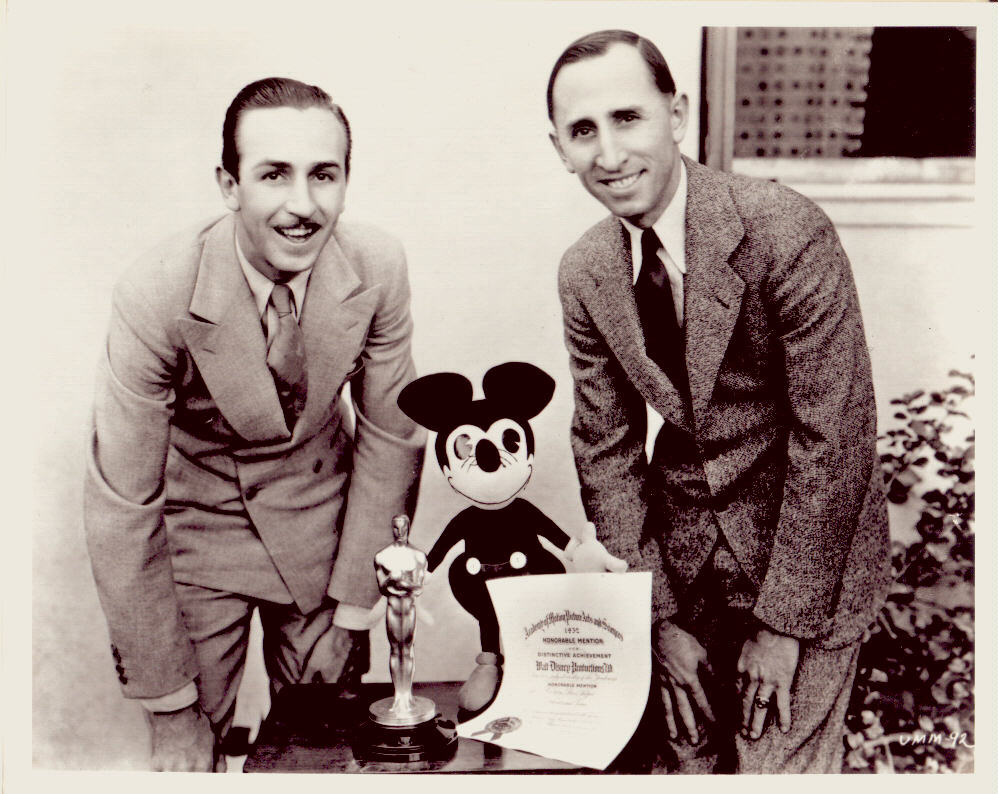
Walt Disney dreamed up ideas for Disney. But it was his brother Roy (right) who found the money to fund his big dreams.

Walt Disney dreamed up ideas for Disney. But it was his brother Roy (right) who found the money to fund his big dreams.

We are all familiar with Walt Disney, the creative genius behind Disney. How many people know that he actually started the business with his younger brother, Roy? Walt was the creative one, but Roy is the one who raised the money and kept it financially stable. In terms of revenue, it is now the largest media conglomerate in the world.

Mark Zuckerberg hired Sean Parker as the first president of Facebook in 2004, and although Sean was later ousted for his excessive partying, Zuckerberg has said, “Sean was pivotal in helping Facebook transform from a college project into a real company.”

Sometimes I am asked at what point an entrepreneur needs to hire a professional manager. There is no particular formula. It totally depends on the industry and the needs of the company. It could be at the $1 million level or one much higher, or even in some cases, lower.

As an indication, here are two signs that it may be time to hire a professional to help you run your company:

1. You are no longer doing what you do best

Rather than focusing on innovations to keep your company growing and increasing market share, you are spending more time on areas like accounting and managing a growing workforce. Getting help in those areas will allow you to focus on using your personal strengths to improve the company.

You may be one of those entrepreneurs who actually is a very good manager and things have been going well so far. But you can only handle so many jobs, and if you are spending a majority of your time managing the company, who is managing the innovation to make the company continue to grow?

2. Your company has outgrown your ability to handle it on your own

A professional manager will not only take over some of the workload, she can bring new skills to the company and instill best practices from experiences at other businesses. She can also analyze the strengths and weaknesses of your business in a way you are unable to as the founder of the business.

A successful entrepreneur is one that is able to recognize when he needs to hire professional help and is then able to make the transition to having someone else handle the day-to-day management.

For tips on how to hire the right professional, see my column “How to Search for Superstars.”

Look for me November 10 at 4:30 at the Book Festival of the Marcus Jewish Community Center of Atlanta. I’ll be discussing my book,  ”How Not to Hire a Guy Like Me: Lessons Learned from CEOs’ Mistakes.” The event is free and open to the public. Click here for more information.

Creating Your Business Development Plan

I had just been hired by a company to help it turn things around when there was a fire in the corporate office. Now, as a Turnaround Authority I had come in to “put out fires” before but this was the first time we literally had flames!

Fortunately, the company’s records were backed up once a week. Unfortunately, the person designated to take home the back-up every week so it would be in a separate location was out sick that day. In addition to everything else that was lost, a week’s worth of records were unrecoverable.

While this company eventually recovered, some don’t ever recover from a disaster. They lose weeks of production resulting in the loss of sales, profit and customers. Even if a company has business interruption insurance, it may not be enough to cover the losses suffered. And it won’t get your customers back.

In last week’s column I discussed the need for every business to have a continuity/disaster recovery (BC/DR) plan and the three elements that should be included: how employees will communicate, where they will go and how they will continue to do their jobs.

This week I’d like to address how you get started creating one. It is an extensive document and can be an overwhelming process, but there is help.

There are a lot of great resources for businesses on the Federal Emergency Management Agency (FEMA) website, including this helpful diagram of the four steps of an effective BC/DR plan.

5.3.4.0 Business Continuity Planning Process

Step One: Business Impact Analysis

The first step is to gather information to evaluate how your business will be impacted should operations be disrupted. Conduct a risk assessment and look for areas where your business may be vulnerable should a disaster occur. For example, does your building have an operational sprinkler system and are your fire alarms fully operational? Do your employees know what to do in case of fire?

Use a Business Impact Analysis Worksheet that breaks down the operational and financial impacts according to the timing and duration of the disruption in business operations. For example, a company that distributes gardening supplies and experiences a disaster in January will be less affected than if the same disaster occurred in April, a busier time of year. And obviously, a power outage that lasts a few hours is much less disruptive than one that may continue for several days.

Step Two: Recovery Strategies

Using the information you gathered in step one, document and identify your options for recovery and areas where you may need to fill in gaps. You may have identified that you don’t have current information on how to reach your employees in the event of an emergency. Perhaps an alternate site that you had previously identified for relocation is no longer a viable one or your technology needs have changed.

After selecting strategies that will work for your company, have management approve them and then begin to implement those strategies.

Step Three: Plan Development

Develop the framework of your plan. You may wish to use the Business Continuity Plan form that is provided on the FEMA website. The form will help you organize the business continuity team and addresses interaction with external organizations. Who will contact your vendors and contractors? The form includes a place to list all your vendors and contractors along with their contact information.

Step Four: Testing and Exercise

The last step includes developing an orientation exercise and testing for the business continuity team. Employees need to understand their roles and responsibilities and have a firm understanding of all the procedures involved.

After conducting testing, incorporate any lessons learned or gaps that were discovered into your plan.

The FEMA website also has Business Continuity Planning Suite software that you can download to help your business create, improve or update your business continuity plan. The software includes a 30-minute video-based course to get you started. And that is an important step if your business does not have a BC/DR plan — get one started.

Look for me November 10 at 4:30 at the Book Festival of the Marcus Jewish Community Center of Atlanta. I’ll be discussing my book,  ”How Not to Hire a Guy Like Me: Lessons Learned from CEOs’ Mistakes.” The event is free and open to the public. Click here for more information.

When Disaster Strikes: Creating a Business Continuity Plan

The pipes in the office on the floor above yours burst and your entire floor is flooded and all the computer equipment is destroyed. There is a weeklong ice storm that shuts down the power in your building and no one can work there until it is restored. There is a flu epidemic in your town and half your staff is unable to work for several days.

These are just a few among many events that could occur that could temporarily shut down your business. What would you do then? Do you have a business continuity plan?

In this two-part series we will cover what should be included in a business continuity plan and how you get started creating one.

You have probably also heard of a disaster recovery plan. That is essentially the same as a business continuity plan but because of our human nature and our “that can’t happen to me” mentality, business owners and CEOs often neglect to get around to creating one so the industry often uses the term business continuity plan instead. While there are some distinctions, the two types of plans are often referred to as BC/DR — business continuity, disaster recovery so that’s the term I’ll use.

I will address three elements that should be included in a BC/DR plan: how will employees communicate, where will they go and how they will continue to do their jobs. Let’s address each of these.

1. How will your business communicate?

Every business should have an emergency communication plan and a person designated to be in charge of declaring a disaster and implementing that communications system. Determine whom your business will need to communicate with: off-site employees, families, vendors, customers, emergency responders. Make sure you have up-to-date contact information for everyone and assess the availability of alternate means of communication, for example using your Facebook and Twitter account to communicate with the public on your situation.

In the old days, groups of people used to communicate with phone trees – a network of people to spread information, set up like a pyramid with one person calling two people, who each call two until everyone is notified. Set up a phone tree for your business as a back up in the event other types of communication are shut down.

2. Where will your employees go?

The most important rule in a BC/DR plan is people first. You must first secure everyone’s safety before moving on to the resumption of business operations. If the offices are not inhabitable the next issue is where the people and operations will go. The BC/DR plan needs to include a designated relocation area.

You will also want to have a teleworking policy in place for employees for whom that is appropriate.

3. How will your employees continue to do their jobs?

This step is obviously the critical one for the continuity of your business. Assuming you have a place to go and all your data backed up and available off-site, how will your employees access it?

The days of lining up desks and phone and getting back to work are over — getting the necessary systems up and working can be much more complicated these days. Your plan needs to include how you can get employees functioning again as soon as possible.

Creating an effective BC/DR plan is time-consuming and complicated. But your business really can’t afford not to have one. Next week we’ll discuss how to go about creating one.

Look for me November 10 at 4:30 at the Book Festival of the Marcus Jewish Community Center of Atlanta. I’ll be discussing my book,  ”How Not to Hire a Guy Like Me: Lessons Learned from CEOs’ Mistakes.” The event is free and open to the public. Click here for more information.

Church Ladies Passing the Plate – to Themselves

Many ladies of the church devote countless hours of volunteer work to their congregations — arranging flowers, planning weddings, cooking food for gatherings and doing whatever it takes to service their congregations. But it seems that some of the ladies who work at the church are involved in another not so helpful activity. Stealing.

In my book, “How Not to Hire a Guy Like Me: Lessons Learned from CEOs’ Mistakes,” I tell the story of the church bookkeeper who stole money from one church and after being caught, moved to another state and stole millions from that church as well. Seems she is not alone.

Sharon Warunek won’t be going to her job at the Diocese of Scranton in Pennsylvania any longer, after working there for 27 years. As office manager of the church’s Society for the Propagation of Faith, she opened all the checks people donated to benefit the poor. Instead of passing the money along to those who need it most, she instead used at least $340,000 to cover her monthly Discover credit card bill.

Jerri S. Hunter of Virginia managed to embezzle half a million dollars from the Chester United Methodist Church over the course of six years and faces 14 counts of embezzlement. And she wasn’t even caught while she worked there. After she was fired for an unrelated charge, volunteers who were handled tasks she previously performed found discrepancies in the numbers.

Although the Hilltop Lutheran Church in South Bend, Indiana, only had 120 members, the secretary and treasurer Jane Loprest managed to steal $119,000 in the eight years, taking it upon herself to double and triple her pay. She was smart enough to manage the accounts so the church was never overdrawn. Using surveillance photos from the church’s bank, postal inspectors determined she was writing checks but never issuing them, instead cashing them for herself. She is serving a year and a day in prison. At least she said she was sorry.

Sadly, ladies stealing from the church could form their own church circle — and have quite a few members. One out of eight fraud schemes involves a religious organization or other non-profit. And most of the thefts are committed by women.

The gender gap is fairly easily explained when you consider that women handle most of the bookkeeping jobs in the United States. They are the ones with access to the money. The Bureau of Labor Statistics reported that in 2010, 90 percent of the bookkeepers in the United States were women.

But why churches, religious organizations and non-profits? These are the more vulnerable organizations. They have “have very weak control systems. They’re not operating on big budgets that allow them to spend money on accountants,” according to Chris Marquet, CEO of Marquet International, a security firm based in Boston that tracked worker embezzlement schemes over the past five years.

The lesson here is not to be suspicious of the kindly lady at the reception desk or the office manager at your church office. It’s a lesson for anyone that owns or runs a business, particularly a smaller one that doesn’t have an accounting department. Always take a look at your books and institute controls on financial transactions. Don’t make anyone even attempt to violate the seventh commandment with your business’s money.

Look for me November 10 at 4:30 at the Book Festival of the Marcus Jewish Community Center of Atlanta. I’ll be discussing my book,  ”How Not to Hire a Guy Like Me: Lessons Learned from CEOs’ Mistakes.” The event is free and open to the public. Click here for more information.

Creativity Key to Conquering the Competition

One of the skills I need to rely on the most in my job as a turnaround authority is creativity. When I’m presented with companies that are in dire straits financially, with creditors pounding at the door, coming up with a creative solution that can work for everyone can be the answer.

So I love reading stories about business owner who came up with their own creative solutions. Here are three stories about using creativity to conquer the competition.

I recently read the obit for Robert Taylor. You may not know his name but I guarantee you’ve been using his product for decades and probably have several in your home right now.

Robert invented bottled liquid soap dispensed by a pump. Tired of the mess his bar of soap left on the counter, he knew he had hit on a good idea. Now that’s smart. But what he did next is even smarter.

Any inventor knows that if his product has a market, his idea can be copied and mass-produced. On “Shark Tank,” the show where entrepreneurs appear before investors looking for money for their inventions, that is often the first question asked. “What is to prevent someone else coming along and bringing the exact same product to market?” one of them will ask the hopeful inventors.

Robert anticipated that happening. So he borrowed $12 million and used that money to order 100 million little plastic pumps for his soap dispensers. Well, guess what? The back order on the pumps was so huge that any potential rivals could not get the part they needed to create their own product for at least a year.

Because he successfully cornered the market for so long, the worth of his brand increased. In 1987 he sold Softsoap to Colgate-Palmolive for $61 million.

Another clever gentleman figured out an innovative way to discourage shoppers at his appliance store from stopping at other stores to comparison shop after they left his. He bought a freezer and filled it with gallons of ice cream. As customers left, he gave them each a free carton. They were excited at the unexpected treat, and of course, had to rush straight home to put it in their freezers.

Urban Outfitters, which had $2.8 billion in sales last year, beat its competition by hiring artists rather than business people to manage their stores. While most retail establishments look the same whether you’re in New Mexico or New Jersey, every Urban Outfitter store looks different as the managers are given the freedom to arrange their stores as they see fit. The founders believed that their core demographic, college students, would appreciate the difference. And even better, if their strategy were successful, their more traditional competitors wouldn’t want to fire all their current managers to copy their idea. It worked. Sales at the retail giant continue to grow, with an increase of 13 percent last year.

If competition is proving to be a problem for the growth of your company, you may not need to change your product. Try being creative in your approach and see what happens.

Tips on Dealing with Your Banker

I’ve been on both sides of that big banker’s desk. Early in my career I worked as a banker, which gave me invaluable experience on learning how the money guys think. We learned the things that would make us fire CEOs and shut down companies.

These were lessons that were invaluable to me during my entire career as the Turnaround Authority. I know what bankers, investors and other creditors are looking for when they analyze a business. I know what they want to hear from CEOs and business owners.

Businesses need money to operate. That means they generally need bankers and investors — the money guys. But many CEOs treat their bankers as the opposition, like Mr. Potter, “the richest and meanest man in the county” in “It’s a Wonderful Life.”

Having a good relationship with your banker is so important, I devoted an entire chapter to it in my book “How Not to Hire a Guy Like Me: Lessons Learned from CEOs’ Mistakes,” which covers the 10 C’s of bank relationships for CEOS.

Here are just a few tips on how to have a good relationship with your banker. (For more info, you can always buy my book!)

1. Always keep your banker informed

Communication is one of the 10 C’s I discuss in my book and is the key to having a good relationship with your banker. We’ve all gone through difficult situations where we didn’t want to share bad news with someone, preferring to stick our head in the sand or hope the problem goes away. But not telling your banker when your company is having problems paying a vendor, collecting receivables or going through a cash flow crunch is the exact wrong thing to do. In fact, if your banker finds out you have not been disclosing crucial financial information, it can be the quickest path to having your bank loan called or to losing your financing.

2. Have contingency plans

Bankers and other money people like stability. They want to know you have a plan in place in the event that one of the 3 D’s happens — death, disability or disappearance. Yeah, I’ve had a few CEOs vanish on me. You can add that to the list of behaviors that won’t endear you to a banker.

While acting as CEO at one company I hosted a cookout with the employees. You’d be surprised what you learn while chatting around the grill. One employee mentioned excess inventory purchasing. Turned out it was a case of multi-million dollar fraud. The previous CEO knew something was wrong but didn’t deal with it. I found the problem and had four executives arrested. The CEO? Gone with the wind.

Do you know what will happen to your business if any of the three D’s occurs? Make a plan and show it to your banker.

3. Demonstrate good character

Do what you say you will do. Make your payments when they are due. Keep your banker informed. If you have and demonstrate good character your banker is more inclined to work with you, rather than against you.

The money people want to trust you — indeed, they are placing a great deal of trust in you when they close on that loan to your company. Make them happy they extended that trust.

A banker can be a powerful ally for your business. One of the best things you can do for your business is to have a good working relationship with your banker.

Look for me November 10 at 4:30 at the Book Festival of the Marcus Jewish Community Center of Atlanta. I’ll be discussing my book,  “How Not to Hire a Guy Like Me: Lessons Learned from CEOs’ Mistakes.” The event is free and open to the public. Click here for more information. Hope to see you there!


Tips for Handling the Coddled Family Member on the Job

You hired your cousin Peter as the sales manager for your family business. He has not been meeting his quotas, and even worse, doesn’t seem to think it’s important, and the company is suffering. Or you hired your daughter right out of college as Director of Merchandising because you were desperate to fill that position and she needed a job. But she’s far more interested in how the packaging looks than in working with manufacturers and customers.

In my last post, “The Peter Principle at Work in Family Businesses,” I wrote about how the principle that employees tend to rise to the level of their incompetence is often true in family businesses. This often happens because a family member has been coddled at the business. The column included a quiz so you could tell if you are in this situation.

So you took the quiz and may have determined that you do have a family member who has been enabled, and you now understand that situation is damaging to your business. So what do you do about it?

You have three options:

1. Provide training or education

If the family member truly does care about the business and its success and wants to continue in his position, providing additional training so he can perform better could be your solution. Your brother may have been promoted to a management position but has never had to manage people before. Let him know you are interested in helping him grow professionally and part of that involves getting more training.

Ask him to find some classes or seminars he can take to sharpen his skills as a manager. If he truly does want to succeed, he will be happy to take advantage of your investment in his future.

2. Reassign the family member to another more suitable position

Sometimes a family member is just not suited to handle her job responsibilities. In the case of the daughter in the merchandising area, her major was in graphic design and she really has no interest in setting budgets and developing the skills she would need to be successful in merchandising. She is unhappy in her position because she doesn’t have the skills and really has no interest in acquiring them. To keep someone in a position that they have no interest in and can’t handle is a disservice to both the employee and the company.

If you have a design department and could use her help there, then discuss the situation and reassign her. If there is not a position available, you can suggest she go to work for another company to gain valuable experience, then return to yours when you do have a space for her. Make sure to let her know you do have her interests at heart and want her to be happy.

3. Terminate the family member

Sometimes it becomes clear that the family member is just not going to work out, for whatever reason. He isn’t motivated, she doesn’t want to be there in the first place, he is unable to acquire the skills necessary to work in the family business. It’s a tough call, but often it’s the only course to take if the first two options aren’t a possibility.

Firing a family member is a delicate process. You’ll want to consider giving the family member a generous severance, allowing him to save face by “resigning” and possibly funding out placement services so he can find a new position.

For more tips on how to do this, please read my post, “How to Fire Grandma and Still Get Invited to Sunday Dinner.”

It is possible work with family members that have been coddled or enabled and turn them into an asset, rather than a liability for your company. But if that doesn’t work, the best thing for everyone is to terminate them.

The Peter Principle at Work in Family Businesses

Perhaps nowhere is the Peter Principle more prevalent than in a family business. Lawrence J. Peter and Raymond Hull wrote about the principle in their 1969 book “The Peter Principle,” which stated simply is “Employees tend to rise to the level of their incompetence.”

I thought about the Peter Principle when I was reading an article on the Harvard Business Review Blog Network about the effect enabled family members could have on a business. Keeping incompetent or unskilled family members as employees can be devastating to a business and can ultimately cause it to fail.

I’ve seen it so many times. Uncle Joe runs a division of the company because he invested a couple thousand of dollars when the business was formed 20 years ago but he doesn’t have a clue what he’s doing. A couple starts a business and their son takes over and runs it when they retire. But he’d spent most of his time playing golf and traveling, stopping by occasionally to pick up a check and flirt with the women in the sales department. The only thing he knows how to manage is his account at the country club.

Even if they don’t know how to do their present jobs, they sometimes continue to be promoted. And the business suffers.

The authors of the article, Josh Baron and Rob Lachenauer, co-founders of Banyan Family Business Advisors, included a quiz so you can determine whether you are coddling a family member. If you answer yes to four or more of these questions, then you probably are overindulging him or her. Here are their questions:

1. Has a family member worked exclusively in the family’s business?

2. Has he reported within his parent’s span of control for most, or all, of his career?

3. Has she never received 360 feedback on her performance?

4. Is the family member paid above the market-based compensation for his position?

5. Has the family member been promoted beyond his capabilities?

6. Is the family member’s behavior often outside the boundaries of acceptable value-based behavior of the company?

Do these scenarios sound familiar to you? Coddling a family member does no good for anyone. The business suffers if someone is incompetent to handle his or her job. The individual often knows he or she is not performing the job the way it should be done and is ashamed or may be embarrassed. Morale at the company suffers when the other employees witness the family member receiving preferential treatment and not handling their job responsibilities.

In a previous column I gave five tips for successful family businesses. If you have a suspicion you may be coddling a family member, I suggest you pay particular attention to one of these suggestions: Put the right people in the right jobs. I don’t care if Uncle Joe gave you seed money to start a division of your company. If he doesn’t know how to manage a department don’t put him in charge of it. Don’t let the Peter Principle be at work in your family business.

For tips on how to handle the situation of a coddled relative, please read my next post. 

Qualities to Look for in a CEO

The Wall Street Journal reported this week that the pace of CEO changes is picking up again and almost 20 major companies are searching for a replacement in the top position. These include Microsoft, J.C. Penney Co. and Toys ‘R’ Us. Martha Stewart Living Omnimedia Inc. has been searching since late last year to replace Lisa Gersh.

What should these search committees be looking for?

A study done by Russell Reynolds Associates found nine attributes that differentiated CEOs from other top executives. The study assessed areas like communication skills, relationship skills and decision-making approaches. These nine attributes fell into three areas: willingness to take calculated risks, bias toward action and the ability to efficiently read people.

I can agree with these attributes as being critical to those taking over management of a major company. Having hired, fired and served as a CEO for several companies, I suggest they look for CEOs who have these qualities as well.

1. A person who is willing to admit his or her mistakes

This one is so important that Chapter One of my book, “How Not to Hire a Guy Like Me: Lessons Learned from CEOs’ Mistakes,” is about checking your ego.

A CEO must be willing to admit his mistakes, learn from them and move on. Covering up mistakes can not only lead to bigger problems, when you are found out you risk losing the respect of all those who work for your company as well as those that do business with you.

Making mistakes is not usually the major cause of a company’s failure. It’s covering them up or adhering to the mistakes that can lead to major issues.

2. A person who isn’t afraid to hire people smarter than himself

A CEO has to be able to leverage the talents of others. When I am acting as Interim CEO I am always happy when I am surrounded by people smarter than I am. I am the catalyst to get a job done and that is easier to accomplish when the people around me are smart and capable.

3. A person who doesn’t back down from the realities of a bad situation

I devoted a chapter in my book to this as well, called “Confront Your Harsh Realities.” One of the biggest mistakes CEOs make is refusing to recognize challenging situations. Whether it’s an issue with a vendor, problem employees, financing difficulties, a changing marketplace — whatever the issue, a good CEO needs to recognize when a bad situation is brewing and be prepared to handle it.

4. A person who is proactive, not reactive

A good leader needs to head off potential problems before they occur, preventing crises if possible. If a leader is proactive he will have the people, ideas, tools and other resources in place to handle anything that comes along.

5. A person who communicates openly and regularly

A company grows and thrives on open communication in good times. And in bad times, a staff that feels fully informed about what is happening is better able to pull together and weather the harsh periods. And CEOs that keep lines of communication open across all levels in a company can learn a lot from those on the front lines.

I thought of the bias toward action attribute when I read a story about Stephen Elop, who may be Microsoft’s next CEO. According to an article on UsNews.NBCnews.com, when Stephen was a college student in the 1980s he didn’t like the data-sharing methods available. So he bought some Ethernet cable and ran 22 miles of cable around the campus from building to building, creating one of the first Internet networks in Canada.

That’s the kind of man you want leading your company.