Never Skew the Facts to Sell the Deal

My work as the turnaround authority has given me a front-row seat to the behavior of CEOs that led them to crises. This experience provided plenty of fodder for my book, “How Not to Hire a Guy Like Me: Lessons Learned from CEOs’ Mistakes.”

One of the mistakes CEOs make, which I covered in a white paper I wrote, is that they skew the facts to boards, creditors and constituents to “sell the deal.” Now, I often have to deal with unpleasant situations and work with companies in dire straits. But no matter how bad the situation, honesty really is the best policy. Changing the facts, or omitting crucial information to get your way is never the way to go.

Here are two stories to illustrate my point. Both these situations involved CEOs bending the facts so they could qualify for financing their companies couldn’t support.

The CEO of a hard drive manufacturer in California desperately wanted a line of credit from his bank for $60 million, so he stuffed the channel in order to make his company appear more credit worthy.

Stuffing the channel is when a manufacturer oversells product to put sales on the books, despite knowing that much of the merchandise will come back unsold. This inflates the books by overstating the top line, thereby improving the bottom line.

This strategy worked. He got the loan, but when the company repurchased the inventory on the channel within 60 days, it became out of compliance on the line of credit and the bank put the company in default.

That’s when I was brought in to salvage what I could and to hopefully restructure the company. The company survived, thanks to some hedge fund loans, but the CEO lost his job because he skewed the facts and misrepresented the true financial situation of the company.

Not bending the facts is so important that it deserves this second story. Before the technology was so ubiquitous, laser tag equipment had a very high value. A Texas-based company was seeking a large loan and claimed it had more inventory on its books than it did by adding the inventory in its Ireland-based location to the U.S. books. The auditors never verified the inventory and granted the company a far larger loan than it could handle.

When the company filed for Chapter 11, I went to the “plant” in Ireland and was not happy to discover it was just an empty lot. That inventory was just a figment of the president and CFO’s imagination and the company was now $75 million short in inventory.

I immediately went to the judge to convert the case to a Chapter 7 rather than try to bring the company through bankruptcy and be embarrassed by the fraud. The creditors ultimately sued the accounting firm and recovered millions of dollars from faulty accounting, once again highlighting the blunder of skewing facts.

Don’t manipulate data to give an unrealistic picture of your company, especially when it comes to qualifying for financing. There are reasons for the rules that prevent companies from getting loans they can’t handle, and yes, those rules do apply to you.
Top Tips for Keeping Employees Engaged

Last week in the column, “When Your Employees Hate Their Job,” I wrote about the lack of engagement among workers. In the U.S. it is estimated that only 30 percent of employees claim to be engaged at work, according to a recent Gallup survey of 5.4 million adults. I also included tips on what you could do about it that included changing vacation and sick day policies and letting employees write their own job descriptions.

This week, I’d like to share more radical approaches some companies have taken to make sure they have a more engaged work force. I will also share my top tips for re-engaging employees after a company goes through tough times.

How about paying people to quit? Yep, that’s what Amazon does. You can be paid up to $5,000 just to quit. This simple program is called Pay to Quit and that’s exactly what it is. All employees in the fulfillment centers are eligible for it.

Jeff Bezos, chief of Amazon, talked about the program in a recent article in Time magazine, “Amazon Will Pay You $5,000 to Quit Your Job.”

“Once a year, we offer to pay our associates to quit. The first year the offer is made, it’s for $2,000. Then it goes up one thousand dollars a year until it reaches $5,000,” he said.

The company doesn’t really want its employees to quit. In fact, the headline on the offer is  “Please Don’t Take This Offer.” The goal is to get rid of unmotivated employees. As Bezos said, “In the long-run, an employee staying somewhere they don’t want to be isn’t healthy for the employee or the company.”

The program started at Zappos and was adapted by Amazon when it purchased the online shoe retailer. The reasoning is that it costs less in the long run to get rid of employees who don’t wish to be there than keeping these unmotivated employees on the payroll.

It’s not the first such offer the employees get. After an intensive four-week training program and one week on the actual job at Zappos, employees receive “The Offer.” They will receive a $2,000 bonus in addition to pay for the amount of time they have worked if they leave. According to Zappos CEO Tony Hsieh, 97 percent decline.

In my work as a turnaround authority, I have seen what can happen to companies when the employees are actively disengaged. In fact, reengaging employees is one of my greatest challenges when I take over a company. It can be almost impossible to turnaround a company when employees are unmotivated. They work slower, make more mistakes due to basic negligence and may ignore requests of their supervisors.

So how do you do get them back on board when a company is in such bad shape? By that point, it’s too late for measures like changing leave policies or paying folks to leave. They would probably exit in droves!

At that point my ability to reengage employees and turn the company around relies on two things: communication and buy-in.

I tell the story in my book “How Not to Hire a Guy Like Me” about working with an apparel manufacturer. The president had been fired and the company was undergoing a crisis of leadership. The interim president was constantly changing restructuring plans and announcing firings and closings almost daily, creating an emotional roller coast for the staff.

We had to conduct extensive meetings to earn support to proceed with our forbearance agreement and have time to hire a new president.

We had to be very open and honest about our plans with the staff. Once they learned they were an integral part of the process and were hearing the truth from us, we earned their trust. And we got buy-in from them for the path we were taking.

This kind of buy-in was contagious up and down the organization, and this spirit amongst the staff contributed immensely because people felt they were a part of the turnaround. They were committed to the company and seeing it survive. Anything I needed from them I got. I couldn’t have done it without communication and buy-in.

The Most Dangerous Words in Business

As a turnaround authority, I’ve dealt with tens of dozens of businesses that are floundering. Many of them I can save from financial ruin. A few I can’t. They called me too late and while I can salvage parts of them, it’s not possible to bring them back to financial health.

In my several decades of the turnaround business, I’ve come to recognize eight words as very dangerous to the future of a company. “But that’s the way we’ve always done it.”

The ironic thing is I generally hear these words when it is abundantly clear that the way they’ve always done it is clearly not working. But what I learn immediately from these words is that these folks are resistant to change. And every company has to change to survive.

Part of that process of change is reviewing your business model on an annual basis. Examine what is working and what is not, what areas are making money, which ones are not profitable. Look at what competition has done to you the prior year and what effects it may have in the future. And make changes as necessary to that model, no matter how you’ve always done it.

It can be a painful and difficult process sometimes. Just look at Scoutmob, an Atlanta-based company that was founded in 2010 and is now nationwide.

It began with a similar business model to Groupon of offering discounts for local businesses to consumers primarily through an app on their smartphones. They differed in that consumers did not pay in advance, but only paid once they arrived at their location.

In 2012, Scoutmob launched Shoppe, an ecommerce site for small quantities of items from mom and pop shops offered at a discount. They soon found out that this division was much more profitable. While they were not making money from their primary business, Shoppe is reported to have brought in $5 million in revenue last year.

So the company made the tough decision to focus on this division, changing its homepage to reflect that Shoppe is now its focus, as reported in the Atlanta Business Chronicle. Unfortunately, that move meant laying off about half of its staff of 40. One of the founders, Michael Tavani, also exited last week.

Every business must review its business model annually. Yes, it can lead to some tough decisions and you never like to see talented, loyal people lose their jobs. But as Jack Welch said, “Change before you have to.” He also said, “An organization’s ability to learn, and translate that learning into action rapidly, is the ultimate competitive advantage.”

Continuing along the same path without examining your direction and heeding to the phrase, “But we’ve always done it this way,” do not lead businesses to grow.

But they do lead businesses to call me and help them turnaround the mistakes they have made. Which would you rather do?

Let’s Get Personal — About Those Guarantees

How many personal guarantees have you signed? If you are like most business owners and CEOs, you most likely have a lot more than you think. The majority of CEOs I’ve worked with have lost track long ago of personal guarantees they have signed.

If you have an American Express business card, a business loan from a bank or you process credit cards, you have made a personal guarantee. You’d be surprised where personal guarantees show up, and you may have signed some without truly understanding the consequences. Vendors, creditors, banks and landlords could all have asked for a personal guarantee.

I had a client once who told me he was setting up credit card processing for his business and the bank wanted him to sign a personal guarantee for any customer charge backs and the recovery costs for the life of the contract. He was able to negotiate with the credit card processor that he would sign a limited personal guarantee for one year. If he paid his bill on time every month, then after one year the guarantee would automatically drop off.

While this particular contract would probably not have involved a lot of money if he had complied as originally requested, it’s an example of how prevalent these guarantees are and how you may be able to negotiate better terms when asked to sign one.

Should you ever experience trouble with your business, those guarantees could spell trouble. I’ve seen way too many unfortunate consequences of business owners who did not keep track of or understand the consequences of these personal guarantees. They have lost homes, money, yachts and prize-winning horses to the person who held the strongest personal guarantee when their business failed.

One CEO thought his house was safe because it was in his wife’s name and he thought she hadn’t signed anything. But I found that she had signed a document at one point that put their house in jeopardy.

If a business is just starting out and has no credit record, then it’s customary to be asked for a personal guarantee by the bank or person who is risking their money or property. The bank has no other way of ensuring that the money will be paid back. But there is room for negotiation, as my client discovered.

All personal guarantees last forever but you can ask that the guarantee be dropped after a certain amount of on-time payments, as he did. Another option is to ask that the amount of the personal guarantee be limited to a percentage of the total amount or if you are willing to pay a higher interest rate, you could ask for the personal guarantee to be dropped altogether.

The important thing about personal guarantees is that you keep track of them and how much you have at risk. And if your business has been around for awhile and has established good credit, then you could ask to have the personal guarantee removed.


Discovering Fraud By Walking Around

Have a fraud story to share? Send me yours for a chance to win a copy of my book! See details below.

I’ve had a front row view of more instances of fraud than I could have imagined when I first began my career. In my work as the Turnaround Authority™, I’ve seen hundreds of millions of dollars stolen from the companies I’ve worked with. Almost half of my clients have encountered some type of fraudulent situation.

You may think that I uncover fraud by going over the books and discovering something wasn’t quite right. And in many cases that is what has happened. I have plenty of those stories, of accounting personnel setting up dummy companies and payroll accounts, and embezzling hundreds of thousands of dollars.

My favorite story of uncovering fraud this way was when I sat myself down at the CFO’s computer, one I suspected of stealing. He was so organized that he had created a folder on his desktop with an entire spreadsheet detailing all the money he had stolen from the company. It’s so handy when thieves do a lot of my work for me.

But I’ve also found out about many cases of fraud from other employees in a company by employing a form of MBWA, management by walking around. Popular in the 1980s, MWBA really just means walking around and talking to people, face to face, and getting a sense of what is really going on in the office. (For more on MWBA, read my previous column about it, “Get Out of the Corner Office and Hit the Front Line.”)

In one instance of a twist on MBWA, I hosted a midnight barbecue for people working the nightshift. You could call it MBGH, management by grilling hamburgers. As I was grilling and we were all standing around chatting, the employees opened up to me and we began swapping stories. And boy, did I hear a doozy. One of the guys mentioned that he had a concern about excess inventory purchasing. Of course I made a mental note of that. Turned out to be a case of multi-million dollar fraud, which I uncovered because the employee felt comfortable chatting with me in the informal atmosphere.

I uncovered another case of fraud when I learned that a payroll clerk had returned to work the day after an appendectomy. That raised a red flag for me, as it seemed to be an extreme example of devotion to a job. After casually chatting with some other employees about her dedication, I learned they were in awe of sweet “Aunt Tess” because she had not missed a single payroll day in 25 years. Isn’t that something? Why yes it is, and that something is criminal. Aunt Tess was there every payroll day so she could handle the paychecks for the fake employees she had created, allowing her to steal up to $100,000 a year.

One of the best ways to uncover fraud in your company is to create an open door policy, a feeling of camaraderie where communication is encouraged. Generally, if fraud is occurring, someone in the company knows about it or is suspicious that something not quite right is going on. You want to encourage them to share their concerns with you so you can follow up.

I have plenty more stories about fraud and ways to prevent it in my book, “How Not to Hire a Guy Like Me: Lessons Learned from CEOs’ Mistakes.” One of the most rewarding parts of writing this book has been hearing from readers who share their stories of fraudulent activity with me.

Do you have a story of fraud? Please share it with me at lnkatz@aol.com. I’ll print the stories here, and the best story will win a copy of my book.

Sales Were Up, Profits Were Down: What Happened?

In my last blog, “Big Sales Don’t Mean Big Profits,” I told the story of two companies I worked with that had increasing sales but declining profits. They both had problems with their product mix.

It was too late for one company — the owners didn’t want to make the investment needed to keep it running after we identified the problem so they closed it down after 30 years.

We were able to save the other company, although it shrunk from a $600 million company to a $350 million company.

What could both of these companies have done differently? What could have kept them out of this situation, which caused one of them to go out of business completely and the other to shrink to almost half its size?

Although the circumstances related to the issues with their product mixes were very different, the root cause of the problem in both cases was the same: a lack of communication.

Company A, which was a $2 million company that manufactured and distributed products, ran into trouble when their lower-profit sales to big box stores increased, pushing their margins down until they were no longer profitable. The operations and sales manager knew that the percentage of the lower profit sales to the big box companies was increasing — it went from 20% to 80% — yet no one discussed it.

The chief financial officer must have recognized the situation because the profitability of the company was severely impacted, but also didn’t raise the issue. Because no one talked about it, no one attempted to fix it. As Peter Drucker said, “The most important thing in communication is hearing what isn’t said.” You can’t fix what you don’t acknowledge. So the situation just got worse.

With Company B, whose management assured me they did not have a problem with their product mix, we found that even though the company had spent millions on computer systems to make sure they knew exactly what their costs were, there was still a breakdown in the system.

We found that there had been a lot of turnover in one of the key positions responsible for the accuracy of the data going into the computer systems. The new people taking over were not being properly trained. So the company had been selling products based on inaccurate cost structures. Again, there was a failure in communication.

In this case, I was reminded of a quote by George Bernard Shaw, “The single biggest problem in communication is the illusion that it has taken place.”

Communication is one of the keys to the success of any business. In my book, “How Not to Hire a Guy Like Me: Lessons Learned from CEOs’ Mistakes” I discuss the value of honest and open communication. In the case of Company A, the management of the company should have noticed the drastic change that was taking place in their product mix and discussed the situation. Together they could have determined what the effect on the business would be and taken steps to deal with the inevitable decline in profits.

As for Company B, it had a breakdown in the quality of training new staff. The duties of people in a key position were not being adequately communicated so the job was not being performed as it should have been.

Good communication at all levels of an organization can alert you to ways to improve your company while also providing early warning signs if things are starting to go wrong. Open communication will not only help steer your company through hard times, it can prevent them from occurring in the first place.

The Value of the Low-Tech Whiteboard in a High-Tech World

I had to chuckle when I saw an article last week in the Wall Street Journal, “High Tech’s Secret Weapon: The White Board.” Even though I am a fast adopter of technology, I am a major supporter of using the whiteboard in my work as the Turnaround Authority. In fact, I even devoted a whole subchapter of my book, “How Not to Hire a Guy Like Me: Lessons Learned from CEOs’ Mistakes,” to the whiteboard, touting it as one of the keys to success.

So I found it humorous to see this old-fashioned tool referred to as a secret weapon. What was even more interesting is that the article is about the company that developed the note-taking app Evernote. I use Evernote every day, making notes in my iPad that are automatically synced to my computer so I have them with me wherever I go. I can take photos and create to-do lists as well. And the best thing is that these notes are totally searchable so I never waste time tracking down information I need.

I loved learning that almost every surface of the offices of Evernote in Silicon Valley are covered with IdeaPaint, which allows the employees to write on the walls with dry-erase markers. Evernote relies on this low-tech way to engage employees in focusing on developing their high tech products. And it seems many other high tech firms do the same.

As the author, Farhad Manjoo, noted, “Whiteboards are to Silicon Valley what legal pads are to lawyers, what Excel is to accountants, and what long sleeves are to magicians.”

Here are just a few things to love about the use of a whiteboard for business.

1. Anyone can use it

We can all pick up a marker and draw on a whiteboard. I can’t say the same for the ability for everyone to master collaborative software or being able to share documents digitally.

2. It allows people to focus

I would argue that we focus better when looking at the large canvas of the whiteboard than staring at the small screen of a computer, having been conditioned since we were children by the teacher diagramming sentences and doing math problems on a large chalkboard.

3. It points out gaps in logic

One of my favorite ways to use a whiteboard is to draw timelines. I find that drawing on a whiteboard helps a group to clarify complex situations and analyze the issues involved in a particular situation.

For example, I once worked with a racetrack that took 18 months and $100 million to build, and just 30 days to run out of cash. We created a 12-month timeline to get the racetrack out of bankruptcy. It was ambitious, as we had a lot to accomplish for the company to make that goal. But by putting everything that needed to be done on the whiteboard, each person could visualize their own responsibilities and how crucial it was that they each complete their jobs on time so we could make the deadline.

4. It enables collaboration and buy-in

When people participate in the whiteboard process they can clearly visualize their roles and how they all need to work together to accomplish the set goal. And if everyone is allowed to participate and share their ideas freely, you generally achieve automatic buy-in of the steps to achieve that goal.

I’ll continue to incorporate the latest technology into my business. But I will forever be a fan of the good old whiteboard. It’s nice to know all the whiz kids in Silicon Valley agree with me.

Look for me November 10 at 4:30 at the Book Festival of the Marcus Jewish Community Center of Atlanta. I’ll be discussing my book,  ”How Not to Hire a Guy Like Me: Lessons Learned from CEOs’ Mistakes.” The event is free and open to the public. Click here for more information.

When An Entrepreneur Needs to Hire a Professional Manager

Every successful entrepreneur of a certain size company figured out at some point that he needed to hire a professional to run the company so he could do what he does best — create new products and services, explore new market niches and consider new ways to market existing products and services.

Every company needs a balance between the creative visionary and the person who can focus on the day-to-day activities of running the company. The skills and vision needed to start a business are not the same as those required to keep it running.

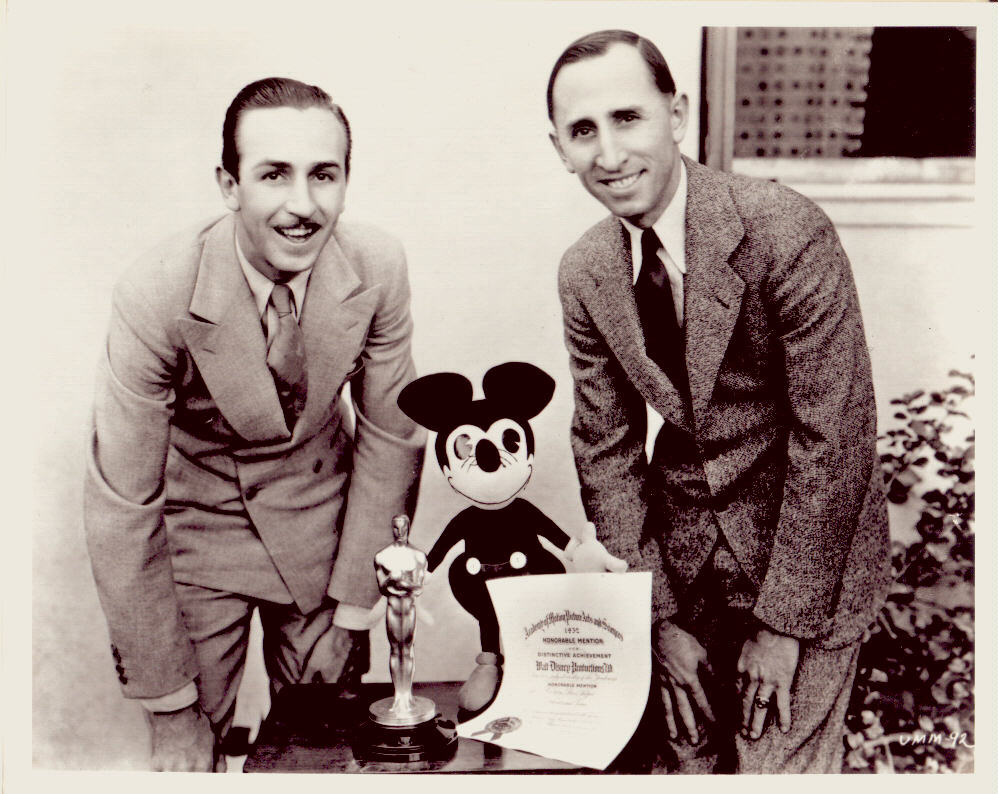
Walt Disney dreamed up ideas for Disney. But it was his brother Roy (right) who found the money to fund his big dreams.

Walt Disney dreamed up ideas for Disney. But it was his brother Roy (right) who found the money to fund his big dreams.

We are all familiar with Walt Disney, the creative genius behind Disney. How many people know that he actually started the business with his younger brother, Roy? Walt was the creative one, but Roy is the one who raised the money and kept it financially stable. In terms of revenue, it is now the largest media conglomerate in the world.

Mark Zuckerberg hired Sean Parker as the first president of Facebook in 2004, and although Sean was later ousted for his excessive partying, Zuckerberg has said, “Sean was pivotal in helping Facebook transform from a college project into a real company.”

Sometimes I am asked at what point an entrepreneur needs to hire a professional manager. There is no particular formula. It totally depends on the industry and the needs of the company. It could be at the $1 million level or one much higher, or even in some cases, lower.

As an indication, here are two signs that it may be time to hire a professional to help you run your company:

1. You are no longer doing what you do best

Rather than focusing on innovations to keep your company growing and increasing market share, you are spending more time on areas like accounting and managing a growing workforce. Getting help in those areas will allow you to focus on using your personal strengths to improve the company.

You may be one of those entrepreneurs who actually is a very good manager and things have been going well so far. But you can only handle so many jobs, and if you are spending a majority of your time managing the company, who is managing the innovation to make the company continue to grow?

2. Your company has outgrown your ability to handle it on your own

A professional manager will not only take over some of the workload, she can bring new skills to the company and instill best practices from experiences at other businesses. She can also analyze the strengths and weaknesses of your business in a way you are unable to as the founder of the business.

A successful entrepreneur is one that is able to recognize when he needs to hire professional help and is then able to make the transition to having someone else handle the day-to-day management.

For tips on how to hire the right professional, see my column “How to Search for Superstars.”

Look for me November 10 at 4:30 at the Book Festival of the Marcus Jewish Community Center of Atlanta. I’ll be discussing my book,  ”How Not to Hire a Guy Like Me: Lessons Learned from CEOs’ Mistakes.” The event is free and open to the public. Click here for more information.

Creating Your Business Development Plan

I had just been hired by a company to help it turn things around when there was a fire in the corporate office. Now, as a Turnaround Authority I had come in to “put out fires” before but this was the first time we literally had flames!

Fortunately, the company’s records were backed up once a week. Unfortunately, the person designated to take home the back-up every week so it would be in a separate location was out sick that day. In addition to everything else that was lost, a week’s worth of records were unrecoverable.

While this company eventually recovered, some don’t ever recover from a disaster. They lose weeks of production resulting in the loss of sales, profit and customers. Even if a company has business interruption insurance, it may not be enough to cover the losses suffered. And it won’t get your customers back.

In last week’s column I discussed the need for every business to have a continuity/disaster recovery (BC/DR) plan and the three elements that should be included: how employees will communicate, where they will go and how they will continue to do their jobs.

This week I’d like to address how you get started creating one. It is an extensive document and can be an overwhelming process, but there is help.

There are a lot of great resources for businesses on the Federal Emergency Management Agency (FEMA) website, including this helpful diagram of the four steps of an effective BC/DR plan.

5.3.4.0 Business Continuity Planning Process

Step One: Business Impact Analysis

The first step is to gather information to evaluate how your business will be impacted should operations be disrupted. Conduct a risk assessment and look for areas where your business may be vulnerable should a disaster occur. For example, does your building have an operational sprinkler system and are your fire alarms fully operational? Do your employees know what to do in case of fire?

Use a Business Impact Analysis Worksheet that breaks down the operational and financial impacts according to the timing and duration of the disruption in business operations. For example, a company that distributes gardening supplies and experiences a disaster in January will be less affected than if the same disaster occurred in April, a busier time of year. And obviously, a power outage that lasts a few hours is much less disruptive than one that may continue for several days.

Step Two: Recovery Strategies

Using the information you gathered in step one, document and identify your options for recovery and areas where you may need to fill in gaps. You may have identified that you don’t have current information on how to reach your employees in the event of an emergency. Perhaps an alternate site that you had previously identified for relocation is no longer a viable one or your technology needs have changed.

After selecting strategies that will work for your company, have management approve them and then begin to implement those strategies.

Step Three: Plan Development

Develop the framework of your plan. You may wish to use the Business Continuity Plan form that is provided on the FEMA website. The form will help you organize the business continuity team and addresses interaction with external organizations. Who will contact your vendors and contractors? The form includes a place to list all your vendors and contractors along with their contact information.

Step Four: Testing and Exercise

The last step includes developing an orientation exercise and testing for the business continuity team. Employees need to understand their roles and responsibilities and have a firm understanding of all the procedures involved.

After conducting testing, incorporate any lessons learned or gaps that were discovered into your plan.

The FEMA website also has Business Continuity Planning Suite software that you can download to help your business create, improve or update your business continuity plan. The software includes a 30-minute video-based course to get you started. And that is an important step if your business does not have a BC/DR plan — get one started.

Look for me November 10 at 4:30 at the Book Festival of the Marcus Jewish Community Center of Atlanta. I’ll be discussing my book,  ”How Not to Hire a Guy Like Me: Lessons Learned from CEOs’ Mistakes.” The event is free and open to the public. Click here for more information.

Church Ladies Passing the Plate – to Themselves

Many ladies of the church devote countless hours of volunteer work to their congregations — arranging flowers, planning weddings, cooking food for gatherings and doing whatever it takes to service their congregations. But it seems that some of the ladies who work at the church are involved in another not so helpful activity. Stealing.

In my book, “How Not to Hire a Guy Like Me: Lessons Learned from CEOs’ Mistakes,” I tell the story of the church bookkeeper who stole money from one church and after being caught, moved to another state and stole millions from that church as well. Seems she is not alone.

Sharon Warunek won’t be going to her job at the Diocese of Scranton in Pennsylvania any longer, after working there for 27 years. As office manager of the church’s Society for the Propagation of Faith, she opened all the checks people donated to benefit the poor. Instead of passing the money along to those who need it most, she instead used at least $340,000 to cover her monthly Discover credit card bill.

Jerri S. Hunter of Virginia managed to embezzle half a million dollars from the Chester United Methodist Church over the course of six years and faces 14 counts of embezzlement. And she wasn’t even caught while she worked there. After she was fired for an unrelated charge, volunteers who were handled tasks she previously performed found discrepancies in the numbers.

Although the Hilltop Lutheran Church in South Bend, Indiana, only had 120 members, the secretary and treasurer Jane Loprest managed to steal $119,000 in the eight years, taking it upon herself to double and triple her pay. She was smart enough to manage the accounts so the church was never overdrawn. Using surveillance photos from the church’s bank, postal inspectors determined she was writing checks but never issuing them, instead cashing them for herself. She is serving a year and a day in prison. At least she said she was sorry.

Sadly, ladies stealing from the church could form their own church circle — and have quite a few members. One out of eight fraud schemes involves a religious organization or other non-profit. And most of the thefts are committed by women.

The gender gap is fairly easily explained when you consider that women handle most of the bookkeeping jobs in the United States. They are the ones with access to the money. The Bureau of Labor Statistics reported that in 2010, 90 percent of the bookkeepers in the United States were women.

But why churches, religious organizations and non-profits? These are the more vulnerable organizations. They have “have very weak control systems. They’re not operating on big budgets that allow them to spend money on accountants,” according to Chris Marquet, CEO of Marquet International, a security firm based in Boston that tracked worker embezzlement schemes over the past five years.

The lesson here is not to be suspicious of the kindly lady at the reception desk or the office manager at your church office. It’s a lesson for anyone that owns or runs a business, particularly a smaller one that doesn’t have an accounting department. Always take a look at your books and institute controls on financial transactions. Don’t make anyone even attempt to violate the seventh commandment with your business’s money.

Look for me November 10 at 4:30 at the Book Festival of the Marcus Jewish Community Center of Atlanta. I’ll be discussing my book,  ”How Not to Hire a Guy Like Me: Lessons Learned from CEOs’ Mistakes.” The event is free and open to the public. Click here for more information.