Dump, Delegate or Deal: Tips on Delegation

I read a quote recently by Daniel Doctoroff, CEO of Bloomberg L.P., who said, “I either delegate something, I dump it, or I deal with it.”

In my last column, I mentioned that the problem with many CEOs is that they end up dealing with tasks they should have dumped or delegated. Many never learned how crucial delegation is to the success of their business. The simple truth is that you can never grow a successful business unless you learn to delegate.

An article on Forbes.com references London business school professor John Hunt who says that only 30 percent of managers think they can delegate and of those, only one in three is considered a good delegator by his subordinates. I’ll do the math for you: only one out of 10 managers know how to delegate effectively.

Here are a few tips if your delegation skills could use some refining.

Be clear about what is necessary for the success of your business

In an article I read recently on FastCompany.com, “A Reformed Workaholic on How to Work Smarter,” author Kate Matsudaira wrote, “Take a long, hard look at your to-do list and your big-picture goals. Some of these items are critical and must be done by you, but most likely many aren’t. Ask yourself, ‘How does this grow my business?’ and be ruthless about cutting out anything that doesn’t fit.”

Don’t micromanage

Hire the right people and let them do their jobs. Being micromanaged fosters bad morale, resentment and employees feeling that they are not trusted. Employees want to feel like they “own” their work and feel trusted to get their jobs done.

Learn from the example of K.T. Keller, cited in the article “History’s 10 worst auto chiefs.” K.T. was president of Chrysler from 1935 to 1950 and put himself at the center of an organizational chart that resembled a wheel. All communication went through him and he involved himself in details of design, much to the detriment of the company. He thought cars should have roofs high enough so people could wear hats inside them, which led to unfashionable cars and declining sales.

Give employees the ability to make decisions

In addition to delegating work, also delegate responsibility for that work and the authority to make decisions regarding its completion. Your employees will feel empowered, trusted and more positive about the work environment. And guess what? They will also be more productive and the company won’t waste a lot of time sending decisions up the organizational chart that could be handled at a lower level.To get started, try these four steps from the article “Delegate now, before it’s too late.”

  1. Define and hand over the full responsibility to the identified candidate(s) as an experiment.
  2. Step back, do not interfere and observe the process for a few weeks.
  3. Iron out the kinks, pull back some tasks or give extra responsibility based on the observations of what went right or wrong during the period.
  4. Stabilize the process, get the documentation in place and set up reporting timetables and templates to get ongoing feedback on the delegated process.

Repeat as necessary, and watch your business grow.
Increased Employee Freedom Helps Retain Top Talent

“Adequate performance gets a generous severance package.” That line is from a PowerPoint Deck with 127 slides written by Netflix CEO Reed Hastings and the former Chief Talent Officer Patty McCord that explains the company’s philosophy of talent management.

The deck has been viewed more than five million times, as reported in an article by Patty in the Harvard Business Review, “How Netflix Reinvented HR,” where you can also review this fascinating deck for yourself.

Maybe it’s been viewed so often because companies are looking to emulate the success of Netflix. After all, it is the world’s leading Internet TV network and has 44 million members. Last year its stock more than tripled.

Or maybe people are curious to learn about a company that has an unlimited vacation policy. As one of the slides in the deck reads: “There is no policy or tracking of vacation. There is also no clothing policy at Netflix, but no one comes to work naked. Lesson: you don’t need policies for everything.”

But that is exactly what happens as companies begin to grow. With each problem they encounter, they institute a new policy. More and more policies mean less freedom for their employees. Netflix found that as the most talented employees felt their freedom decreasing, they would leave.

Netflix began developing a philosophy of fewer policies in an effort to keep top employees. Since going public in 2002, traditionally a time when a company would put even more policies into place, it took the opposite approach: Netflix increased the level of talent at the company and increased employee freedom.

As two of the slides read, “Responsible people thrive on freedom, and are worthy of freedom. Our model is to increase employee freedom as we grow, rather than limit it, to continue to attract and nourish innovative people, so we have a better chance of sustained success.”

So unlike many companies that have strict vacation policies with complicated accrual formulas, Netflix has none whatsoever. Top management is encouraged to take several vacations each year, to refresh them and to serve as an example to their staff.

In an article in Businessweek in 2012, “How to Set Your Employees Free: Reed Hastings,” he wrote about Netflix’s “freedom and responsibility culture” and said they focus on what people get done, not how many hours they work. “We want responsible people who are self-motivating and self-disciplined, and we reward them with freedom.”

Patty McCord said in an article on www.fastcompany.com, “Netflix’s Major HR Innovation: Treating Humans Like People,” that she believes in most large companies 97 percent of the employees do great work on their own and don’t need much help from the human resources department. It’s the other 3 percent that takes most of HR’s energy, costing the company money. Netflix’s approach is to not hire those people in the first place.

I’ve seen something similar so many times in my career as the Turnaround Authority. A small percentage of people can sap the majority or resources of HR. It’s good advice for any company to work hard to find the other 97 percent who can thrive in an atmosphere of freedom and responsibility. And if you do hire people who don’t perform as they should, well, perhaps you can use Netflix’s philosophy on that as well. Reward mediocrity with a generous severance check.

Humility Being Sought in New Hires

“It’s hard to be humble when you’re perfect in every way.”

— Lyrics from “It’s Hard to Be Humble” by Mac Davis

I was reminded of this song when I read an article in Fast Company about the hiring practices of Google. The title of the article is “Why Google Wants New Hires Who are Humble and Argue.”

Google has been notorious for its quirky hiring processes and interview questions that included questions like “How many piano tuners are there in the entire world?” and “How many golf balls can fit in a school bus?”

Over the years, Google has gone back to evaluate how well their hiring practices worked in determining the success of its employees. Turns out, not so well.

In 2009, Peter Norvig, Google’s director of research, wrote in his book, Coders at Work, “One of the interesting things we’ve found, when trying to predict how well somebody we’ve hired is going to perform when we evaluate them a year or two later, is one of the best indicators of success within the company was getting the worst possible score on one of your interviews. We rank people from one to four, and if you got a one on one of your interviews, that was a really good indicator of success.”

In 2013, Vice President of People Operations Laszlo Block told the New York Times that they found those famous brainteasers they had been using as part of the hiring process were a complete waste of time. “They don’t predict anything. They serve primarily to make the interviewer feel smart.”

Academic performance and GPAs had been stressed, even for hires in the 30s and older. The company admitted that their research found that after two to three years, academic performance and grades were unrelated to performance.

So what is Google looking for now? In addition to technical expertise, leadership and ownership, the company sets a high priority on humility.

“Without humility, you are unable to learn,” said Laszlo Bock, again in an interview with the New York Times for the article “How to Get a Job at Google.” They have found that the most successful people at Google are those who are willing to argue for their point of view, but when they learn a new fact or hear an opposing view, are able to be persuaded. “You need a big ego and small ego in the same person at the same time,” Bock said.

Other people have recognized that humble people make the best and most successful employees. Michael Hyatt, a former CEO and New York Times best-selling author wrote in the article “What Should You Look for in the People You Hire” that he has a standard formula for when he is recruiting people: “H3S.” Two of these qualities are being honest and being hungry. By that he means someone who is always setting goals and wishes to exceed expectations. The third quality is being humble.

“A humble person is open to correction and not defensive. He is quick to admit mistakes and apologize … He is conscious of the contributions others have made to his life, his projects, and his career. He is quick to give credit to them and express sincere gratitude,” he wrote.

I’m glad to hear Google has come around to what is really an old-fashioned way of hiring — finding people who are willing to listen to others and learn from them.

When An Entrepreneur Needs to Hire a Professional Manager

Every successful entrepreneur of a certain size company figured out at some point that he needed to hire a professional to run the company so he could do what he does best — create new products and services, explore new market niches and consider new ways to market existing products and services.

Every company needs a balance between the creative visionary and the person who can focus on the day-to-day activities of running the company. The skills and vision needed to start a business are not the same as those required to keep it running.

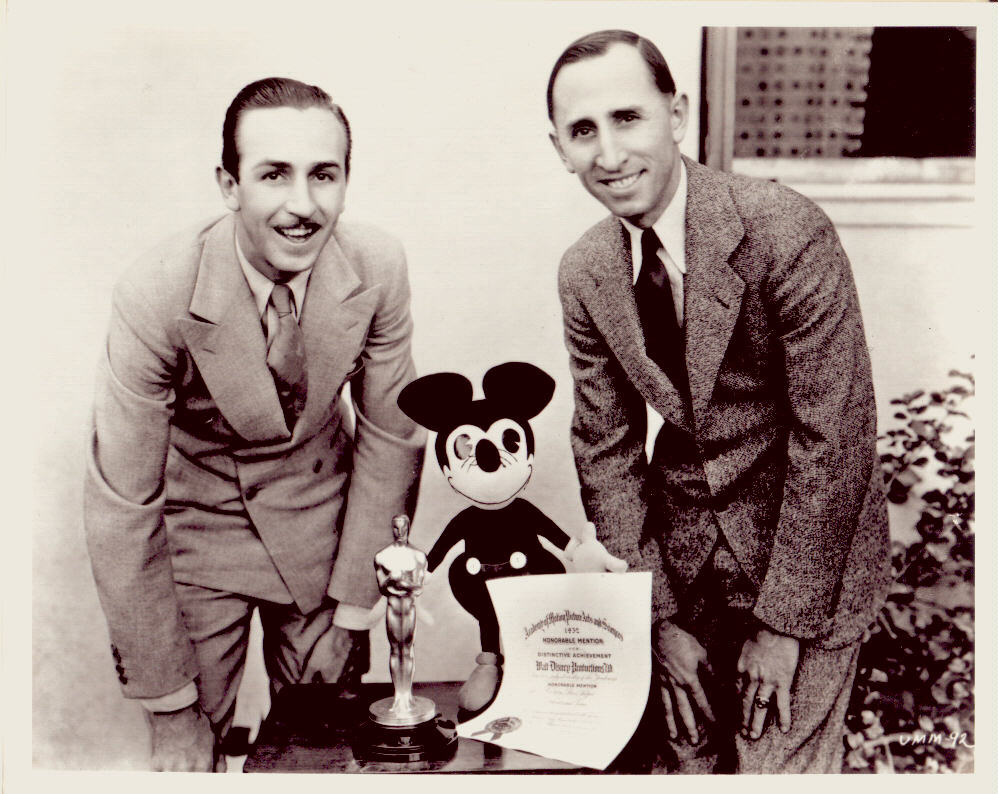
Walt Disney dreamed up ideas for Disney. But it was his brother Roy (right) who found the money to fund his big dreams.

Walt Disney dreamed up ideas for Disney. But it was his brother Roy (right) who found the money to fund his big dreams.

We are all familiar with Walt Disney, the creative genius behind Disney. How many people know that he actually started the business with his younger brother, Roy? Walt was the creative one, but Roy is the one who raised the money and kept it financially stable. In terms of revenue, it is now the largest media conglomerate in the world.

Mark Zuckerberg hired Sean Parker as the first president of Facebook in 2004, and although Sean was later ousted for his excessive partying, Zuckerberg has said, “Sean was pivotal in helping Facebook transform from a college project into a real company.”

Sometimes I am asked at what point an entrepreneur needs to hire a professional manager. There is no particular formula. It totally depends on the industry and the needs of the company. It could be at the $1 million level or one much higher, or even in some cases, lower.

As an indication, here are two signs that it may be time to hire a professional to help you run your company:

1. You are no longer doing what you do best

Rather than focusing on innovations to keep your company growing and increasing market share, you are spending more time on areas like accounting and managing a growing workforce. Getting help in those areas will allow you to focus on using your personal strengths to improve the company.

You may be one of those entrepreneurs who actually is a very good manager and things have been going well so far. But you can only handle so many jobs, and if you are spending a majority of your time managing the company, who is managing the innovation to make the company continue to grow?

2. Your company has outgrown your ability to handle it on your own

A professional manager will not only take over some of the workload, she can bring new skills to the company and instill best practices from experiences at other businesses. She can also analyze the strengths and weaknesses of your business in a way you are unable to as the founder of the business.

A successful entrepreneur is one that is able to recognize when he needs to hire professional help and is then able to make the transition to having someone else handle the day-to-day management.

For tips on how to hire the right professional, see my column “How to Search for Superstars.”

Look for me November 10 at 4:30 at the Book Festival of the Marcus Jewish Community Center of Atlanta. I’ll be discussing my book,  ”How Not to Hire a Guy Like Me: Lessons Learned from CEOs’ Mistakes.” The event is free and open to the public. Click here for more information.

Testing Just One Part of Hiring Process

I’ve taken a few personality tests. One was on how I negotiate and I thought the results didn’t really reflect how I go through that process. But everyone else thought the test had totally pegged me. When I took the Myers-Briggs Type Indicator it pretty much nailed my personality.

I thought about these tests when I read a discussion on www.wsj.com on the percentage of companies that use some sort of tests during the hiring process. Nearly 20 percent of employers use personality tests in the hiring or promotion process, according to a survey done in 2011 by the Society for Human Resource Management of 495 human resource managers.

When you get to hiring for and promoting into top positions, the amount of testing and assessments of candidates understandably goes way up. According to an article in the Wall Street Journal, “Employers Put Executive Job Candidates to the Test,” 72 percent of the 516 companies polled used assessments to make decisions on promoting executives, more than double three years ago.

These assessments can include psychological interviews, role-playing and simulations. For example, candidates may be told to pretend they are dealing with a frustrated customer who starts yelling at them.

Not surprisingly, Google has identified the qualities and skills it desires in people who fill their top positions and has created an algorithm to predict each candidate’s success.

While I do think these tests have some validity, I believe they should be treated as just one indicator of whether a person can handle a high-level position. Testing should be just part of the process.

A key part of the process for me is just spending time with the person and getting to know him or her. After being in the turnaround business for more than 30 years, I’ve done a lot of hiring and firing. Luckily, one of the skills I’ve developed along the way is the ability to read people, a skill that is useful in just about every area of life.

It’s a skill that the legendary coach Bear Bryant had, according to people who worked with him. Bruce Arians, the Cardinals head coach, was his assistant for two years and called him “a master of personnel, of people.” It’s undoubtedly one of the skills that helped him win 323 games as coach of the University of Alabama football team.

(I also adhere to one of his hiring policies. “I don’t hire anybody not brighter than I am,” he said. “If they’re not smarter than me, I don’t need them.”)

If you want to improve your ability to read people and learn more about them than what they are telling you, here are a few questions to ask from an article by Anthony K. Tjan on the Harvard Business Review blog, “Becoming a Better Judge of People.”

• How does this person treat someone he doesn’t know? If you meet in an office, how did he treat the receptionist? If you go out to a meal, is she polite to the waiter?

• Does the person feel authentic? Did your BS detector go off at any time? Are they trying too hard?

• Is this person an energy-giver or taker? We’ve all known people that give off a negative energy. Does this person have a positive view of the word or tend to react negatively?

And one of the most important questions to consider: Is this person self-aware? A good understanding of your strengths and weaknesses is key to being a good leader.

Testing candidates can tell you a lot about their qualities, skills and values. But spending time with them and observing how they behave can tell you even more. 

Qualities to Look for in a CEO

The Wall Street Journal reported this week that the pace of CEO changes is picking up again and almost 20 major companies are searching for a replacement in the top position. These include Microsoft, J.C. Penney Co. and Toys ‘R’ Us. Martha Stewart Living Omnimedia Inc. has been searching since late last year to replace Lisa Gersh.

What should these search committees be looking for?

A study done by Russell Reynolds Associates found nine attributes that differentiated CEOs from other top executives. The study assessed areas like communication skills, relationship skills and decision-making approaches. These nine attributes fell into three areas: willingness to take calculated risks, bias toward action and the ability to efficiently read people.

I can agree with these attributes as being critical to those taking over management of a major company. Having hired, fired and served as a CEO for several companies, I suggest they look for CEOs who have these qualities as well.

1. A person who is willing to admit his or her mistakes

This one is so important that Chapter One of my book, “How Not to Hire a Guy Like Me: Lessons Learned from CEOs’ Mistakes,” is about checking your ego.

A CEO must be willing to admit his mistakes, learn from them and move on. Covering up mistakes can not only lead to bigger problems, when you are found out you risk losing the respect of all those who work for your company as well as those that do business with you.

Making mistakes is not usually the major cause of a company’s failure. It’s covering them up or adhering to the mistakes that can lead to major issues.

2. A person who isn’t afraid to hire people smarter than himself

A CEO has to be able to leverage the talents of others. When I am acting as Interim CEO I am always happy when I am surrounded by people smarter than I am. I am the catalyst to get a job done and that is easier to accomplish when the people around me are smart and capable.

3. A person who doesn’t back down from the realities of a bad situation

I devoted a chapter in my book to this as well, called “Confront Your Harsh Realities.” One of the biggest mistakes CEOs make is refusing to recognize challenging situations. Whether it’s an issue with a vendor, problem employees, financing difficulties, a changing marketplace — whatever the issue, a good CEO needs to recognize when a bad situation is brewing and be prepared to handle it.

4. A person who is proactive, not reactive

A good leader needs to head off potential problems before they occur, preventing crises if possible. If a leader is proactive he will have the people, ideas, tools and other resources in place to handle anything that comes along.

5. A person who communicates openly and regularly

A company grows and thrives on open communication in good times. And in bad times, a staff that feels fully informed about what is happening is better able to pull together and weather the harsh periods. And CEOs that keep lines of communication open across all levels in a company can learn a lot from those on the front lines.

I thought of the bias toward action attribute when I read a story about Stephen Elop, who may be Microsoft’s next CEO. According to an article on UsNews.NBCnews.com, when Stephen was a college student in the 1980s he didn’t like the data-sharing methods available. So he bought some Ethernet cable and ran 22 miles of cable around the campus from building to building, creating one of the first Internet networks in Canada.

That’s the kind of man you want leading your company.

The First 15 Seconds

In the movie “The Big Chill” one of the characters has been dating for 20 years and laments how hard it is.

“I know in the first 15 seconds if there’s a chance in the world,” she says.

“At least you’re giving them a fair shot,” her friend replies.

That may sound a bit harsh, but the truth is you can tell a lot about someone within the first 15 seconds of meeting him or her. This is crucial to remember if you are interviewing for a job or meeting with a potential client.

In my last column I wrote about ways to lose a job in an interview. I’ve interviewed hundreds of people for all levels of jobs in my decades as a Turnaround Authority, and yes it is possible that you can seriously decrease your odds of landing that job within the first 15 seconds.

We all make snap judgments when we meet someone. Will we like this person? Do we want to be around this person? Our brains made fairly rapid assumptions about the personal traits of others. This process is known as thin-slicing, which refers to our ability to gauge what is important and form opinions from limited information.

Malcolm Gladwell wrote about thin-slicing in his fascinating book “Blink: The Power of Thinking Without Thinking.” Speaking of the book in an interview he said, “When you meet someone for the first time, or walk into a house you are thinking of buying, or read the first few sentences of a book, your mind takes about two seconds to jump to a series of conclusions…. As human beings we are capable of making sense of situations based on the thinnest slice of experience.”

If you are interviewing for a job, you need to spend time focusing on what you are telling the interviewer about yourself in the first 15 seconds. Here are just a few things I can tell immediately upon meeting someone.

1. Whether they are respectful of others

Did he show up on time? Was she friendly to the receptionist or anyone else I introduced her to? Is he dressed appropriately for a job interview? Does she look polished and put together? Are his pants ironed? Did she wait for me to invite her to sit down?

2. Whether they have confidence

Did she look me in the eye when we met? Does he stand up straight? Did she smile when she met me? Does he seem excited to be here?

3. Whether they arrived prepared

Did he bring a copy of his résumé and references along? Does she know my name?

Frank Bernieri did a study at the University of Toledo in Ohio to find out if there are any particular mannerisms that will help you in a job interview. Two people were selected to be interviewers and were trained for six weeks on interviewing techniques. They then interviewed 100 people for 15-20 minutes and filled out a six-page questionnaire on each person. His conclusion was there were no particular tricks you can use in an interview.

But then one researcher asked to do a second study with the videos they had made of each interview, showing people just the first 15 seconds of the interview as the applicant arrived and met the interviewer. They were then asked to rate the candidates using the same criteria that the trained interviewers had.

In an article in The New Yorker written by Malcolm Gladwell, Bernieri talked about the results. “On nine out of the 11 traits that the applicants were being judged on, the observers significantly predicted the outcome of the interview. In fact, the strength of the correlation was extraordinary.”

Accept the importance of the first 15 seconds of any encounter towards making an impression on someone. And do what you can to make yours a positive one.

Tips on Hiring From the Corner Office

“Here’s a calculator, a pencil and a sandwich. We’ll be back in two hours.” That’s how one $2 billion hedge fund interviews for analysts positions.

That’s one of the things I’ve learned reading “The Corner Office,” a column by Adam Bryant that appears in the New York Times on Fridays and Sundays. He interviews CEOs with questions about leadership and management.

Because I deal with CEOs as well as function as an interim CEO in my business as The Turnaround Authority, I enjoy reading insights into other CEOs. When I’m running a company I do a lot of hiring and firing so I especially enjoy reading their thoughts on how they hire new people for executive positions.

Meridee A. Moore is founder of Watershed Asset Management based in San Francisco where they give the calculator, pencil and sandwich test. They simulate a real office experience and see how an analyst reacts to a tough assignment, looking for people who enthusiastically embrace the challenge.

She said they consider it a bonus if a person has had a rough patch in his or her past, because, “If you’ve ever had a setback and come back from it, I think it helps you make better decisions. There’s nothing better for sharpening your ability to predict outcomes than living through some period when things went wrong.”

Bill Marriott, executive chairman and former CEO of Marriott International, says as a young man he learned a lesson from President Eisenhower, who was visiting his family’s farm at Christmas. They were going to shoot quail but it was extremely cold, so his dad asked the president if he still wanted to go. President Eisenhower turned to young Bill and said, “What do you think we should do?”

From that Bill learned that the four most important words are, “What do you think?” Like me, he likes to hire people smarter than he is, but sometimes those people come with huge egos that preclude them from considering other people’s point of view. So when he interviews candidates he always looks for good listeners.

The CEO of YouSendIt, Brad Garlinghouse,  says he looks for people with passion. Some of the questions he asks include, “How would your friends describe you in college?” and “When you started working, how would your first group of colleagues describe you?” He also looks for humility so he asks if they have ever fired someone and what it was like. He is looking for a sense of empathy from their response.

Wendy Lea, chief executive of the customer experience platform Get Satisfaction, also looks for people who are self aware by asking her favorite question, “Let’s assume we’ve worked together now for six months. There’s something that I’m going to observe of you that I have no idea about right now. What would that be?” She finds that is a way to dig a little deeper into a person.

The CEO of International Medical Corps, Nancy Aossey, says one of her favorite interview questions is to ask candidates about colleagues who are not on their reference list, people they didn’t get along with. She wants to know what those people would say about the candidate.

You may be surprised what Karl Heiselman, the chief executive of Wolff Olins, is looking for when he asks candidates, “What’s your story?” He doesn’t just want to hear about the job they are interviewing for. He is trying to find out what they want to do with life and determine if they are being sincere.

If you are interviewing with a CEO it’s usually a given that you’ve already got the skills and experience for the position. So what they are looking for goes deeper than that. They are looking for people who are self-aware, display passion for the profession and are good listeners.

What do you think?

Smart Businesses Recruit from the Military

Every year on Memorial Day we celebrate those who have made the ultimate sacrifice and died serving our country. We also take a moment to acknowledge the 1.5 million men and women serving in our armed forces today, helping to protect the freedoms we enjoy in the United States.

In addition to being grateful for their service, smart businesses also recognize the value that young people who leave the military can bring to their companies.

In 2008, senior executives at Walmart were dealing with the potential vacuum of young leaders to grow into store management roles. Their usual recruiting methods couldn’t keep up with their projected growth.

The CEO, Bill Simon, who was a 25-year veteran of the Navy and Naval Reserves, suggested the company create a program to recruit junior military officers.

“The thinking was that we could bring in world-class leadership talent that was already trained and ready to go,” said Jennifer Seidner, a senior recruiting manager at Walmart. “And then we could teach them retail, because we know that pretty well.”

The Walmart JMO program was launched and dramatically changed how Walmart recruits young talent. This past February the company announced that effective this Memorial Day weekend, it would commit to hiring more than 100,000 honorably discharged veterans within 12 months of leaving active duty for all types of positions.

Walmart isn’t the only company that sees the value in hiring young, trained talent.

The financial services company USAA launched the “Combat to Claims” initiative to train post-9/11 veterans to become claims adjustors.

“The reason the program is working so well is because military folks have such a sense of discipline and order,” said Joe Robles, the CEO of USAA and a retired Army major general.

Each year Victory Media publishes the “Top 100 Most Military-Friendly Employers” index to serve the 400,000 military personnel who leave the service each year to enter civilian work. The list is based on surveys of businesses with annual revenues of more than $500 million.

The trucking company Crete Carrier is on the list and actively recruits military on its website: “We’re looking for men and women with honesty and integrity, who assume responsibility and adhere to a code of ethics. In other words, if you succeeded in the military, we’d like to enlist your services. Welcome home.”

Another company on the list is Travelers Insurance. “We find that military veterans bring dedication and discipline to their roles, and that they seek and accept responsibility readily,” said John Clifford, executive vice president of Human Resources. “The skills they learned during their military service transition well to any position within our company.”

Other companies that actively hire military officers include Deloitte, General Electric, Shell, Amazon, Accenture and PricewaterhouseCooper PwC.

Hiring veterans isn’t just a feel-good thing to do for your country. It makes sense for your business. As Amazon CEO Jeff Bezos said, “We actively seek leaders who can invent, think big, have a bias for action, and deliver results on behalf of our customers. These principles look very familiar to men and women who have served our country in the armed forces, and we find that their experience leading people is invaluable in our fast-paced work environment.”